
Installing a home surveillance system is one of the most effective ways to enhance household security, yet many homeowners make errors that weaken the system’s performance. The process of closed circuit camera installation may appear straightforward, but overlooking critical details can reduce clarity, coverage, and reliability.
Overlooking Strategic Camera Placement
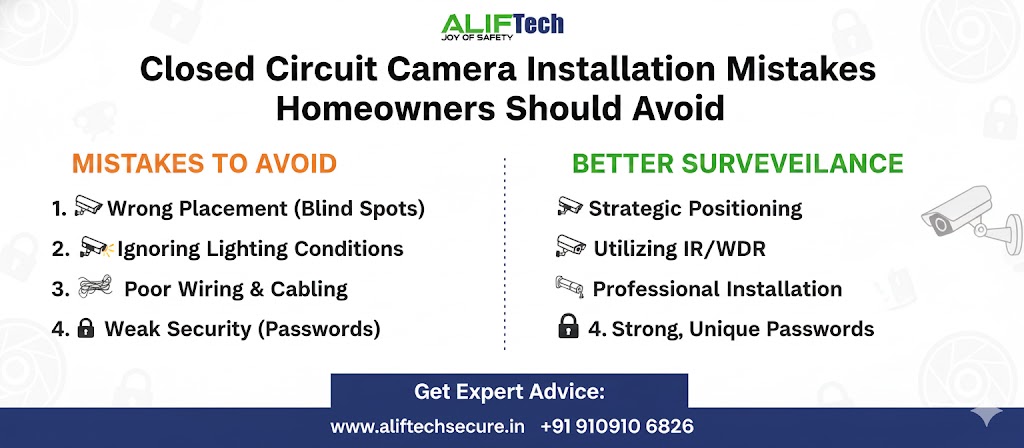
One common mistake during closed circuit camera installation is mounting cameras without evaluating the area’s vulnerabilities. Homeowners sometimes focus only on visible entrances, ignoring blind spots such as side windows, back gates, or garage pathways. Proper placement requires a full assessment of property layout, lighting conditions, and potential hiding areas. Installing cameras too high may minimise facial recognition, while placing them too low can expose devices to tampering. Strategic positioning ensures maximum visibility and better incident documentation.
Ignoring the Importance of Proper Wiring and Connectivity
Many reliability issues stem from poor cabling practices during cctv camera installation. Loose cables, exposed connections, or low-quality wires can result in intermittent video feeds, system shutdowns, or complete camera failure. Homeowners should ensure cables are weather-resistant, neatly routed, and adequately protected from rodents or moisture. In addition, weak Wi-Fi coverage or overcrowded network channels can lead to video lag. Investing in structured wiring or a stable network layout greatly improves surveillance performance.
Using Inadequate Storage or Mismanaging Video Recording Settings
An effective camera system depends heavily on proper storage capacity. Using a DVR or NVR with insufficient space prevents continuous recording or overwrites important footage too quickly. Another mistake is selecting low-resolution recording to save space, which compromises image clarity. Adjusting frame rates, resolution settings, and motion-triggered recording helps maintain a balance between storage efficiency and high-quality video output.
Ignoring Environmental and Weather Conditions
Homeowners frequently overlook how environmental factors affect camera performance. Areas with intense sunlight may cause glare or silhouette effects, while low-light zones may require cameras with night-vision capabilities. Ignoring these conditions results in blurred or unusable images. Weather-resistant housings, proper sealing, and appropriate lens selection ensure long-term durability, especially in outdoor installations. Paying attention to environmental placement keeps cameras functioning at peak quality throughout the year.
Skipping System Testing and Routine Maintenance
Even the best surveillance system underperforms without regular testing. Many homeowners assume their cameras work simply because they are powered on. Failing to check angles, review video clarity, or confirm storage functionality leads to unnoticed issues until a security event occurs. Routine cleaning of lenses, firmware updates, and monthly system reviews are essential. Partnering with professionals who specialise in Electronic Security Solutions can further improve reliability and reduce the chance of operational failures.
Conclusion
Avoiding common surveillance errors begins with understanding the essentials of an effective security setup. A thoughtful approach to closed circuit camera installation, combined with proper placement, quality equipment, and regular maintenance, ensures your home remains well-protected. Homeowners who stay informed and attentive to system details experience stronger coverage, clearer footage, and greater peace of mind—achieving the best possible results from their installation efforts.

