
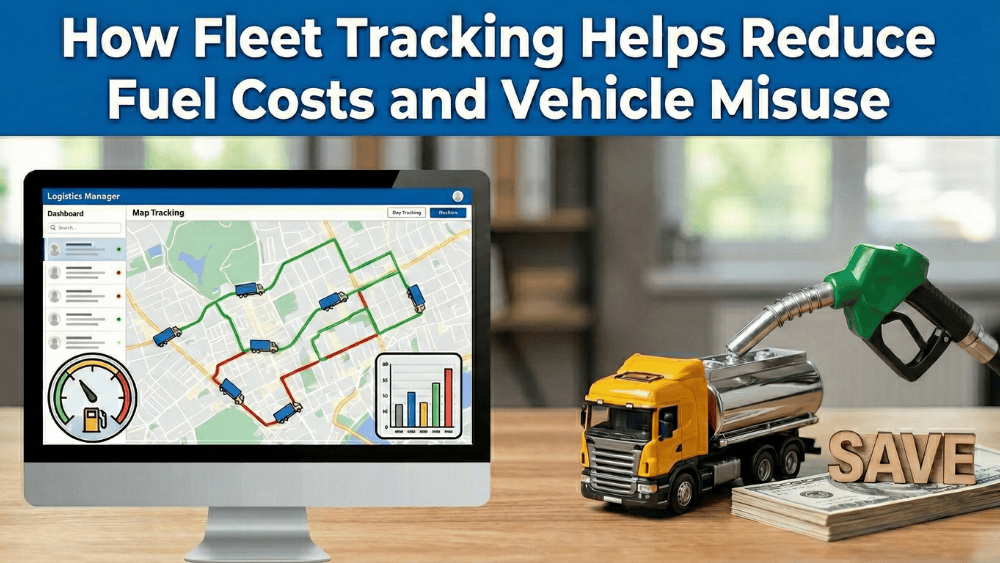
The control of fuel prices and the avoidance of the misuse of vehicles are two of the largest problems for businesses that rely on commercial vehicles. Due to the increased cost of fuel and the narrowing of profit margins, businesses are resorting to modern fleet management solutions as a way of remaining competitive.
Fleet tracking is one of the tools available that has the power to provide real-time access to the position of the vehicle, its path, and driving habits to optimize operations.
The report on the Future of Fleet Technology trends released by Verizon in 2025 reveals that business organizations utilizing fleet GPS technologies have saved an average of 12% in fuel costs through improved routing, less idling, and increased practices in monitoring. Such insights can save money on fuel, besides avoiding unnecessary use of vehicles by the fleet manager, as there are relevant decisions aimed at safeguarding assets and enhancing accountability.
By following this guide, you will know how fleet tracking for vehicles will help you save your fuel expenses and misuse of your vehicles, which will eventually lead to sustainability and profitability.
What is Fleet Tracking?
Fleet tracking is the process of tracking, controlling, and optimization of commercial vehicles movement and utilization using digital technologies in real time. It assists companies in monitoring the location of vehicles, their driving habits, fuel usage, and the efficiency of the routes. The advanced fleet management solutions allow making better decisions, lowering operational expenses, enhancing driver responsibility, and ensuring that vehicles are put into use solely to conduct business activities in a way that minimizes vehicle misuse and fuel expenses.
How Fleet Tracking Reduces Fuel Costs and Vehicle Misuse?
The tracking systems of fleet vehicles have been essential to modern businesses in order to have a full-fledged view of the daily activities of the vehicle and the movement of assets. These systems assist in tracking fuel consumption, driving habits, idle period, and performance on routes, and fast detecting abuse patterns that upsurge operation expenses, shorten vehicle life, and affect the overall productivity of the fleet.
The following ways help the business cut fuel expenses and vehicle misuse with the help of fleet and vehicle tracking systems:
Optimized Route Planning
Fleet tracking systems are able to give the most efficient route based on traffic patterns and historical routes. The shorter routes and less congestion will directly decrease fuel usage and result in a minimum unnecessary mileage in day-to-day operations.
Less Fuel Wastage under Surveillance
Under fleet tracking, managers will have a close focus on the trend of fuel usage and will be able to detect unusual consumption. This assists in theft of fuel, poor driving habits, and unnecessary journeys, which silently inflate operational fuel costs.
Administration of Excessive Idling
The tracking systems identify vehicles that are taking too long to make a stop or make a delivery. Minimizing dead time will decrease fuel wastage, wear and tear of engines, as well as enhance the overall efficiency of the fleets without interfering with operational schedules.
Real-Time Monitoring of Movement of Vehicles
Real-time vehicle tracking enables fleet managers to know at any given time the exact positions of the vehicles. This will avoid illegal travel, make sure that the allocated routes are followed, and reduce the use of personal cars during work hours.
Better Driver Responsibility
Whenever the drivers are aware that their driving habit is being observed, they will obey speed limits and the designated routes. Being responsible on the road will result in saving fuel used regularly, and the risk of vehicle abuse will be minimized.
Evidence-Based Business Operations
With the help of fleet GPS, businesses are able to make wise decisions that pertain to route planning, vehicle deployment, and fuel budgeting. Precise information is used to remove inefficiencies which is added to the high fuel price and misuse vulnerability.
Best Practices to Implement Fleet Tracking Effectively
The introduction of fleet vehicle tracking cannot be done effectively by installing technology in vehicles. Companies need to match tracking tools to the business objectives, develop teams, and utilize data gathered rationally. When implemented properly, fleet tracking can increase fuel economy and accountability, and provide quantifiable cost reductions in the management process of day-to-day fleet operations.
The best practices discussed below can be useful in assisting businesses to ensure vehicle tracking is effectively undertaken:
Train Drivers and Fleet Staff: Teach train drivers about the benefits of the system, how to use it, and what is expected of them in the system, so the implementation proceeds more smoothly and the quality of the information remains consistent throughout the company.
Alerts and Notifications: Customize fleet GPS alerts, which can be used in terms of speeding, idling, and route deviation to reduce fuel wastage and to circumvent cases of unauthorized vehicle use.
Periodic Reports: Review Reports: Periodically analyze reports to get an idea of the fuel trends, driver behaviors and route performances taking into account the businesses can implement the trends on time to make cost-effective decisions.
Integrate Tracking With Maintenance Planning: Eschew frequent breakdowns, maximize fuel-saving, and increase long-life and reliability measures of vehicle models by integrating fleet tracking and maintenance planning.
Have Clear Usage Policies: It should have clear policies on what to do with a vehicle, use it, and at which time to work to limit the misuse and make the working teams be disciplined.
Choosing the Best Fleet Tracking Systems for Your Business
The choice of the proper fleet vehicle tracking systems may help to achieve increased fuel efficiency, avert vehicle misuse, and retain control over the operations. Companies need to consider technology regarding its ease of use, accuracy of the data, scalability, and future worth so that the system can meet the immediate demands as well as the growth expectations in the future.
Businesses may consider the following practical tips to select the most appropriate tracking systems to use in their fleets:
- Evaluate the size of the fleet, the type of vehicles, and issues of operations.
- Select a system that has an easy-to-use and simple dashboard.
- Make fleet GPS offer real-time location tracking.
- Find customisable fuel and driver performance analysis reports.
- Choose a tracking solution that can be expanded as your business expands.
- Maintenance and fuel management tools that have check integration options.
- Assess security of data in case the information is secured.
- A demo or trial period is requested to test the system before purchasing it.
The Bottom Line
Fleet tracking can prove helpful to reduce the cost of the fuel used, to eliminate the misuse of the vehicles, and also to increase the efficiency of the fleet for businesses that rely heavily on commercial vehicles to carry out their business. Using data-based knowledge, companies are able to maintain better control over the day-to-day processes, optimization of routes, and sustainable use of automobiles. In order to possess scalable fleet solutions that can be relied upon and have the ability to fit your desired specifications, you can consider partnering with Aliftech Secure and make decisions that are smarter regarding your fleet management.
FAQs – Ensure Seamless Vehicle Management with Fleet Tracking
Q: How does fleet tracking help in reducing fuel costs?
The routes, driver behaviours, and idle time are tracked by the fleet tracking solutions, which helps the companies to reduce the additional unnecessary usage and improve efficiency, in addition to controlling fuel costs.
Q: How is GPS different from fleet tracking?
GPS could only give the location of a vehicle, but fleet tracking is more specific, and it has more capabilities, in that it provides information on fuel consumption, driving habits, and it also gives reports on the operation of the fleet to enable effective control of the fleet.
Q: Will fleet tracking help eliminate unauthorized use of vehicles?
Yes, fleet tracking assists in identifying vehicle idle hours, post-hours travel, and unnecessary journeys so that the firms can take corrective measures in time.
Q: Is fleet tracking useful for small businesses?
Absolutely. The fleet and vehicle tracking systems are efficient and affordable, and thus capable of serving small businesses that are aspiring to reduce costs and improve accountability.
Q: Does fleet tracking influence driver productivity?
Fleet tracking also enhances efficiency, as it promotes responsible driving behavior, saves time, and makes sure that the drivers drive along the designated routes and timetables.
Q: What information are businesses able to retrieve using fleet tracking systems?
Companies that have adopted fleet vehicle tracking can receive location information, fuel consumption data, driver behavior information, route history, and performance analysis to make improved decisions.
