
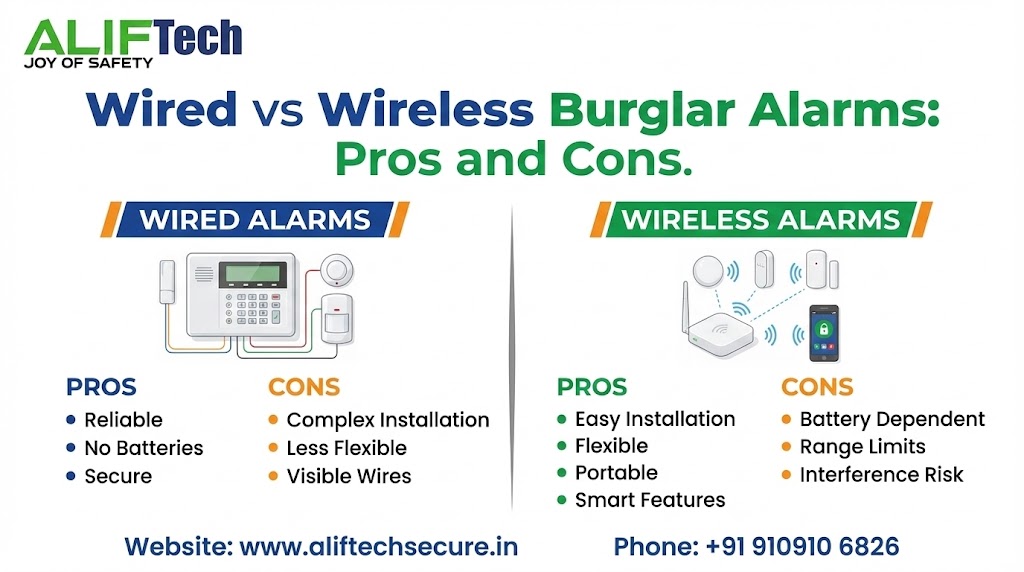
Wired vs Wireless Burglar Alarms: Pros and Cons
Choosing between wired and wireless burglar alarms is one of the most important decisions for your security system. Both have distinct advantages and limitations that affect cost, reliability, and installation. This guide breaks down everything you need to know to make the right choice for your property.
Understanding the Basics
Wired Alarm Systems connect all components—sensors, control panel, keypad, and sirens—through physical cables. These systems have been the security industry standard for decades and are known for their reliability.
Wireless Alarm Systems use radio frequency signals to communicate between components, eliminating the need for extensive wiring. They’ve gained popularity in recent years due to ease of installation and flexibility.
Wired Burglar Alarms: Detailed Analysis
Advantages of Wired Systems
Superior Reliability: Wired connections are not affected by interference, signal loss, or battery failures. Once installed, they provide consistent performance for years with minimal maintenance. There’s no risk of signal jamming or hacking through wireless frequencies.
No Battery Replacements: Since components draw power directly from the electrical system, you never worry about dead batteries causing sensor failures. This is crucial for properties where regular maintenance is challenging.
Better for Large Properties: Wired systems handle extensive installations better, connecting dozens of sensors without signal degradation. They’re ideal for commercial buildings, warehouses, and large homes with multiple floors.
Cost-Effective Long-Term: After initial installation, wired systems have virtually no ongoing costs. No battery replacements, no subscription fees for cellular connectivity, and minimal maintenance expenses.
Faster Response Time: Direct electrical connections mean instantaneous signal transmission with zero latency. This split-second difference can be critical during break-in attempts.
Disadvantages of Wired Systems
Complex Installation: Running cables through walls, ceilings, and floors requires professional installation, often involving drilling and wall modifications. This makes installation time-consuming and labor-intensive.
Higher Initial Cost: Professional installation costs ₹15,000-40,000 for average homes, significantly more than DIY wireless options. The installation process can take 2-4 days depending on property size.
Not Portable: Once installed, wired systems cannot be moved. If you relocate, you leave the system behind or face expensive reinstallation costs at your new property.
Vulnerable to Power Cuts: Without battery backup, wired systems become non-functional during power outages. Quality systems include backup batteries, but this adds to the cost.
Difficult to Expand: Adding new sensors requires running additional cables, which means more wall modifications and professional help. Expansion can be as expensive as the original installation.
Wireless Burglar Alarms: Detailed Analysis
Advantages of Wireless Systems
Easy DIY Installation: Most homeowners can install wireless systems in 2-4 hours without professional help. No drilling through walls or running cables makes it perfect for renters and DIY enthusiasts.
Completely Portable: Moving homes? Simply unmount sensors and reinstall at your new property. This flexibility makes wireless ideal for renters or those planning to relocate.
Lower Initial Investment: Basic wireless systems start at ₹8,000-15,000 with DIY installation. No labor costs and simple setup make them budget-friendly for small properties.
Easy Expansion: Add sensors anytime by simply mounting them and syncing with the control panel. Want extra protection for a new room? It takes just minutes to add a sensor.
Works During Power Cuts: Battery-powered sensors continue operating during electrical outages. The system remains fully functional even when your power is down for extended periods.
Modern Smart Features: Most wireless systems offer smartphone apps, remote monitoring, smart home integration, and cloud storage for alerts and footage.
Disadvantages of Wireless Systems
Battery Maintenance Required: Sensors need battery replacements every 1-3 years depending on usage. Forgetting to replace batteries can leave your property vulnerable without your knowledge.
Potential Signal Interference: Thick walls, metal structures, and electronic devices can weaken wireless signals. Large properties may experience dead zones where sensors don’t communicate reliably.
Limited Range: Most wireless systems have 100-300 meter range in open spaces, but walls and obstacles significantly reduce this. Multi-story homes or large buildings may need signal repeaters.
Vulnerability to Jamming: Sophisticated criminals can use signal jammers to disable wireless alarms. While rare, this is a legitimate security concern for high-risk properties.
Ongoing Subscription Costs: Many wireless systems require monthly fees (₹300-800) for cellular connectivity, cloud storage, and professional monitoring services.
Shorter Lifespan: Wireless components typically last 5-8 years before needing replacement, compared to 10-15 years for wired systems.
Side-by-Side Comparison
| Feature | Wired Systems | Wireless Systems |
|---|---|---|
| Installation | Professional required, 2-4 days | DIY friendly, 2-4 hours |
| Initial Cost | ₹20,000-60,000+ | ₹8,000-30,000 |
| Ongoing Costs | Minimal | ₹300-800/month + batteries |
| Reliability | Excellent, no interference | Good, subject to interference |
| Portability | Fixed installation | Fully portable |
| Expansion | Difficult and expensive | Easy and affordable |
| Range | Unlimited (wired) | 100-300 meters |
| Maintenance | Very low | Moderate (batteries) |
| Best For | Permanent homes, large properties | Renters, small homes, DIY users |
| Lifespan | 10-15 years | 5-8 years |
Which System Should You Choose?
Choose Wired Systems If You:
- Own your property with no plans to move
- Have a large home or commercial building
- Want maximum reliability with zero interference risk
- Prefer lower long-term costs despite higher initial investment
- Are renovating and can easily run cables
- Need a high-security solution for valuable assets
- Live in areas with unreliable cellular coverage
Choose Wireless Systems If You:
- Rent your property or plan to move within 5 years
- Have a small to medium-sized home
- Want easy DIY installation without wall modifications
- Need flexibility to add or relocate sensors frequently
- Have limited initial budget (under ₹20,000)
- Want smart home integration and remote monitoring
- Cannot undertake invasive installation work
Hybrid Solution: Best of Both Worlds
Many modern systems offer hybrid configurations combining wired and wireless components. The main control panel and critical sensors run on wired connections for reliability, while additional sensors use wireless for flexibility and easy expansion. This approach costs 10-20% more than pure systems but offers maximum security and convenience.
Cost Breakdown
Wired System Costs:
- Hardware: ₹12,000-35,000
- Professional Installation: ₹8,000-25,000
- Annual Maintenance: ₹2,000-5,000
- Total First Year: ₹22,000-65,000
Wireless System Costs:
- Hardware: ₹8,000-30,000
- DIY Installation: ₹0 (or ₹3,000-8,000 professional)
- Monthly Subscription: ₹300-800
- Battery Replacements: ₹1,000-2,000/year
- Total First Year: ₹12,600-42,600
Installation Tips
For Wired Systems:
- Hire certified security professionals with good reviews
- Plan sensor locations before installation begins
- Ensure backup battery installation for power outage protection
- Request proper cable concealment for aesthetic appearance
- Get documentation of all sensor and wire locations
For Wireless Systems:
- Test signal strength before permanently mounting sensors
- Use quality batteries (avoid cheap alternatives)
- Mount sensors at recommended heights (usually 2-2.5 meters)
- Keep sensors away from metal objects and thick walls
- Set up battery low alerts on your smartphone app
Maintenance Requirements
Wired Systems: Annual professional inspection (₹2,000-5,000), test all sensors quarterly, check backup battery annually, and clean sensor lenses every six months.
Wireless Systems: Replace batteries every 1-3 years per sensor, test wireless signals monthly, update firmware regularly via app, and clean sensors quarterly to prevent false alarms.
Conclusion
Both wired and wireless burglar alarms effectively protect your property when properly installed and maintained. Wired systems excel in reliability and long-term value for permanent installations, while wireless systems offer unmatched flexibility and ease of use for renters or those wanting DIY solutions. Consider your property type, budget, future plans, and technical comfort level when making your decision. For maximum security, hybrid systems combining both technologies offer the best protection.
Frequently Asked Questions
Q: Can wireless alarms be hacked?
A: Modern wireless systems use encrypted signals making hacking difficult. Choose systems with 128-bit encryption or higher. Signal jamming is a bigger concern than hacking, though both are rare.
Q: Are wired systems really more reliable than wireless?
A: Yes. Wired systems have zero interference issues and no battery failures. They’re more reliable, though quality wireless systems (with proper maintenance) offer 95%+ reliability.
Q: How often do wireless sensor batteries need replacement?
A: Typically every 1-3 years depending on sensor type and usage. Door/window sensors last longer (2-3 years) than motion sensors (1-2 years). Good systems send low-battery alerts.
Q: Can I install a wired system myself?
A: Not recommended unless you have electrical and carpentry experience. Improper installation can damage property and void warranties. Professional installation ensures optimal sensor placement and proper wiring.
Q: Which is better for apartments?
A: Wireless systems are ideal for apartments. They require no wall modifications, are easily removable when you move, and most landlords approve them since there’s no permanent installation.
Q: Do wireless systems work during internet outages?
A: Yes. Wireless systems communicate via radio frequency (RF), not WiFi. Internet outage only affects remote monitoring via smartphone—the alarm still functions locally and sirens will sound.
Q: What’s the range of wireless sensors?
A: Most systems offer 100-300 meters in open spaces. However, walls, floors, and metal objects reduce range significantly. In homes, effective range is typically 30-50 meters from the control panel.
Q: Can I mix wired and wireless components?
A: Yes, many modern systems support hybrid configurations. You can have a wired control panel with wireless sensors, combining reliability with flexibility. This is ideal for home expansions.
