
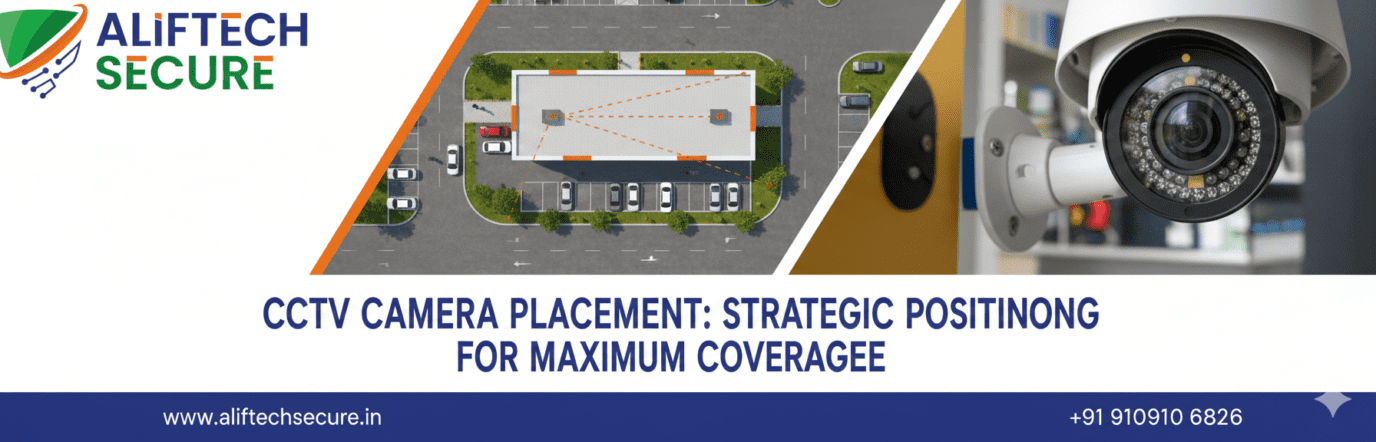
CCTV Camera Placement: Strategic Positioning for Maximum Coverage
Proper CCTV camera placement is crucial for effective security surveillance. Even the most advanced cameras won’t protect your property if they’re positioned incorrectly. This guide covers strategic placement techniques to maximize coverage, minimize blind spots, and enhance your overall security system.
Why CCTV Camera Placement Matters
Strategic camera positioning determines the effectiveness of your entire surveillance system. Poor placement creates vulnerabilities that intruders can exploit, while optimal positioning provides comprehensive coverage, clear facial identification, and valuable evidence for investigations.
Key Principles of Effective Camera Placement
1. Identify Critical Areas
Focus on high-risk zones that require constant monitoring:
- Entry and exit points (doors, gates, driveways)
- Cash registers and point-of-sale areas
- Parking lots and vehicle access points
- Inventory storage and high-value asset locations
- Perimeter boundaries and blind spots
2. Optimal Mounting Height
Mount cameras at 8-10 feet for most applications. This height prevents tampering while maintaining clear facial recognition. For overview monitoring, mount cameras higher at 12-15 feet. Avoid mounting too high, which reduces facial detail and identification capabilities.
3. Proper Camera Angles
Position cameras at a 15-30 degree downward angle for best results. This angle captures faces naturally while reducing glare and sky exposure. Avoid extreme angles that distort images or create unusable footage.
4. Lighting Considerations
Account :
- Avoid pointing cameras directly at light sources
- Use WDR (Wide Dynamic Range) cameras for mixed lighting
- Install infrared or low-light cameras for dark areas
- Consider external lighting to enhance nighttime visibility
5. Eliminate Blind Spots
Overlap camera coverage areas to eliminate gaps. for broad areas and narrow-angle cameras for focused monitoring. Conduct regular walkthroughs to identify and address coverage gaps.
Strategic Placement by Location
Building Entrances and Exits
Mount cameras above doorways facing downward to capture clear facial images of everyone entering or leaving. Install secondary cameras at eye level inside entryways for backup coverage. Ensure cameras cover the immediate approach path, not just the doorway.
Parking Areas
Position cameras at corners and elevated points to maximize lot coverage. Focus on entry/exit points, high-traffic aisles, and vulnerable areas. Use vehicle entry points for vehicle tracking.
Retail and Commercial Spaces
Cover cash registers from multiple angles to monitor both employees and customers. Position cameras to view merchandise displays, aisles, and emergency exits. Install PTZ cameras for large open areas requiring flexible monitoring.
Perimeter Security
Install cameras along fence lines facing inward and outward to detect intrusions. Space cameras based on camera range—typically every 50-100 feet for standard coverage. for large perimeters and low-light conditions.
Residential Properties
Focus on front doors, garage doors, driveways, and backyard access points. Cover side gates and windows on the ground floor. Position doorbell cameras at 4-5 feet height for optimal facial recognition.
Common Camera Placement Mistakes to Avoid
Mounting Too High: Cameras above 15 feet lose facial detail and become ineffective for identification.
Ignoring Lighting: Backlighting and direct sunlight create unusable footage. Test camera positions at different times of day.
Limited Coverage Overlap: Single camera coverage creates vulnerabilities. Always overlap fields of view.
Obvious Camera Positioning: While visible cameras deter crime, making them too obvious invites tampering. Balance visibility with protection.
Neglecting Weatherproofing: Outdoor cameras need proper weatherproof mounting.
Forgetting About Maintenance Access: Position cameras where you can easily access them for cleaning and adjustments.
Camera Types for Different Applications
Dome Cameras: Ideal for indoor areas, discreet appearance, 360-degree rotation options.
Bullet Cameras: Best for outdoor long-range monitoring, weatherproof, visible deterrent.
PTZ Cameras: Perfect for large areas requiring active monitoring and zoom capabilities.
Fisheye Cameras: Provide 180-360 degree coverage for open spaces, reducing camera count.
Turret Cameras: Versatile indoor/outdoor use, easier to adjust than domes.
Integration with Other Security Systems
Modern CCTV systems integrate seamlessly with access control, alarm systems, and video analytics software. Integration enables automated alerts, coordinated responses, and comprehensive security management from a single platform.
Professional Installation vs. DIY
While DIY installation is possible, professional installers understand optimal angles, lighting challenges and local regulations. Professional installation ensures maximum coverage, proper weatherproofing, and compliance
Testing and Adjusting Your Camera Placement
After installation:
- Review footage at different times of day
- Walk through coverage areas to identify blind spots
- Test facial recognition clarity at key points
- Verify night vision effectiveness
- Adjust angles and focus as needed
- Document camera positions and coverage areas
Conclusion
Strategic CCTV camera placement transforms your surveillance system from basic monitoring into a powerful security tool. By following these positioning principles, considering environmental factors, and avoiding common mistakes, you’ll achieve comprehensive coverage that protects your property and provides clear, actionable footage when you need it most.
Ready to optimize your surveillance coverage? Contact a professional security installer for a site survey and customized camera placement plan.
Frequently Asked Questions (FAQs)
What is the ideal height for CCTV camera installation?
The optimal mounting height is 8-10 feet for most applications. This height provides clear facial recognition while preventing tampering. For overview monitoring of large areas, mount cameras at 12-15 feet. Avoid heights above 15 feet as facial detail becomes too poor for identification purposes.
How many CCTV cameras do I need for complete coverage?
Camera requirements depend on property size, layout, and risk areas. As a general rule, one camera covers approximately 25-35 feet effectively. A small home needs 4-6 cameras, while commercial properties may require 8-20+ cameras. Professional site surveys determine exact camera counts for comprehensive coverage.
Should cameras be visible or hidden?
Visible cameras provide deterrent value, discouraging potential criminals. However, make them tamper-resistant by mounting at appropriate heights with protective housing. For covert monitoring of employee theft or specific security concerns, hidden cameras may be necessary. Most effective systems use a combination of both visible and discrete cameras.
What angle should security cameras be positioned?
Position cameras at a 15-30 degree downward angle from the mounting point. This angle captures facial features naturally while minimizing glare and sky exposure. Avoid steep angles above 45 degrees, which distort images and reduce identification capability.
How do I avoid blind spots in my camera coverage?
Overlap camera fields of view by 10-20% to eliminate gaps. Use wide-angle cameras for broad coverage and narrow-angle cameras for focused areas. Conduct physical walkthroughs while reviewing live footage to identify uncovered areas. Place cameras at corners to maximize coverage with minimal equipment.
Can I install outdoor cameras myself?
Yes, but professional installation is recommended for optimal results. DIY installation requires understanding of proper heights, angles, weatherproofing, cable routing, and network configuration. Professionals ensure compliance with local regulations, optimal positioning for lighting conditions, and integration with existing security systems for maximum effectiveness.
