
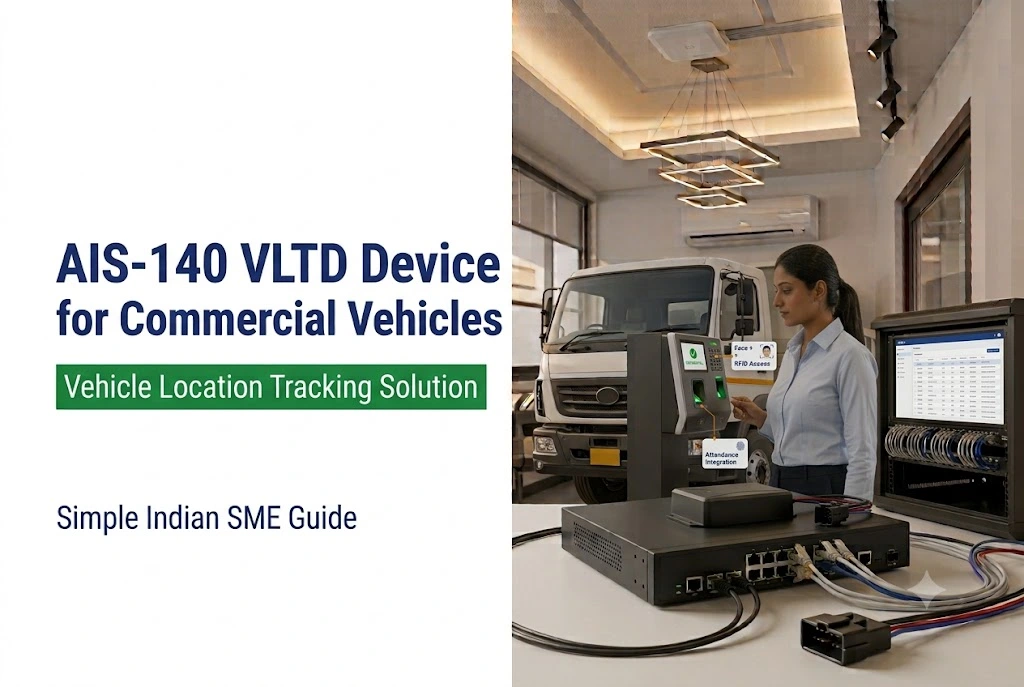
A transport owner in Kanpur takes his Tata truck for fitness renewal and the RTO blocks it. The vehicle has a tracker fitted. It is not a certified one.
That happens daily, and the fix is not complicated. What it needs is a device carrying valid ARAI or ICAT certification, fitted correctly for that specific vehicle, and showing on the Vahan record.
This page covers what separates a certified VLTD from an ordinary tracker, how fitment differs across Ashok Leyland, Volvo, Eicher, Mahindra and Tata vehicles, and what to check before you pay anyone.
Quick Answer
- Certification is the whole thing. Without ARAI or ICAT approval, a tracker is not compliance.
- The device is the same across brands. The fitment is not.
- Fitment alone is not compliance. The record has to reach Vahan.
- A panic button is mandatory, hard-wired, not a phone app.
- Ask for the certificate number by model before paying.
What Makes a VLTD Different From a Tracker
AIS-140 is a technical standard from the Automotive Research Association of India, notified by the Ministry of Road Transport and Highways. VLTD stands for Vehicle Location Tracking Device.
An ordinary GPS tracker shows you where your vehicle is. That is a business tool.
A certified VLTD does more. It tracks through both GPS and NavIC, India’s own satellite system, and transmits to a government-linked server at fixed intervals. It carries a hard-wired panic button for passenger safety. And it has to be approved by ARAI or ICAT before it can legally be sold or fitted.
Without that approval, a tracker is not valid for compliance however advanced it looks.
| Ordinary GPS tracker | Certified AIS-140 VLTD | |
|---|---|---|
| Certification | None | ARAI or ICAT approved |
| Positioning | GPS only | GPS plus NavIC |
| Panic button | Usually absent | Hard-wired, mandatory |
| Data destination | Your app only | Your app plus state transport server |
| Tamper detection | Varies | Required |
| RTO acceptance | Not accepted | Accepted as compliance |
Why certification is checkable now
An RTO officer can verify your device status through the Vahan portal in real time. So fitting an ordinary tracker and calling it a VLTD does not survive an inspection.
The certificate number is what proves the device meets the safety and data rules. Ask for it by device model, and get it in writing. Certification is granted per model, so a manufacturer having certified products does not mean the model you are being offered is one.
Fitment Differs by Vehicle Brand
This is the part most suppliers gloss over, and it is where a bad installation causes problems months later.
The certified device is the same regardless of brand. What differs is the fitment. Each manufacturer routes its electrical system differently, so wiring points, ignition sensing and panic button placement vary between vehicles.
A device wired to the wrong point reports ignition status incorrectly, which quietly breaks every report built on engine hours. A panic button mounted where the driver cannot reach it while seated is a compliance box ticked and a safety feature that does not work.
Ashok Leyland. Heavy trucks and intercity buses on long routes. Cable routing on these has to survive vibration over sustained distance.
Volvo. Premium buses and high-value coaches, where passenger safety and uptime both matter, and where the electrical architecture is more complex than a standard truck.
Eicher. Light and medium trucks in regional goods transport. Straightforward fitment, though panic button placement in a smaller cab needs thought.
Mahindra. Pickups, small commercial vehicles and staff transport. Compact cabs, so device placement matters for both access and tamper resistance.
Tata. The widest range, from city buses to large logistics trucks and school vehicles. Fitment varies considerably across the range, so the same approach does not work on a bus and a tipper.
Our AIS-140 RTO approved trackers cover all of these, and the FleetNow GPS tracker is our hidden-fit option where tamper resistance is the priority.
Fitment Is Not Compliance
Worth stating plainly, because it catches out more operators than anything else.
Buying a certified device and having it fitted does not make you compliant. The device details have to reach your vehicle’s record on the Vahan portal, and that record is what an enforcement officer actually checks.
Installation also has to be done through an authorised installer, since a private mechanic’s work carries no legal standing however good the wiring is.
So the question to put to any supplier is not “is this device certified.” It is: do you handle fitment and Vahan linkage, and will you confirm when the record shows?
Our guide to Parivahan IMEI registration walks through the portal side, and the full AIS-140 compliance guide covers the wider requirement including which vehicles fall under it.
One recurring cost people forget: the M2M SIM has to stay active. A device that stops transmitting is treated the same as no device when fitness renewal arrives.
Why It Matters Beyond the Permit
Fleet owners often treat this as another rule to satisfy. The device earns its keep in other ways once fitted.
Compliance protects revenue. A certified VLTD is required before a fitness certificate or transport permit, so without it the vehicle cannot legally earn.
Enforcement is tightening. Several states now link compliance directly to permit and fitness renewal rather than treating it as a separate check.
The data is useful. Live location, overspeed alerts, route deviation and unexpected stops all come from the same feed the compliance system generates. Fuel waste and vehicle misuse both become visible.
Emergency response improves. The panic button reaches the state transport authority, not just your office.
Five Mistakes That Cost Money
- Buying a tracker with no ARAI or ICAT certificate number. Ask for it by model, in writing.
- Choosing on price and ignoring after-sales support. When a device drops off at 6 AM before a trip, you need someone reachable.
- Skipping NavIC support, which weakens accuracy on remote stretches where it matters most.
- Letting an untrained person fit the device, which can void compliance regardless of the hardware.
- Never confirming the Vahan record. Verify it yourself rather than assuming the installer did.
How to Choose
Check certification first
Confirm the ARAI or ICAT certificate number for the exact model. That single check protects you from fines and wasted money.
Match the device to the use case
A school bus needs strong passenger-safety features and careful panic button placement. Goods trucks running long inter-state routes need solid 4G connectivity and reliable NavIC accuracy on thin-coverage stretches. For a taxi fleet, simple low-cost units that still meet the standard are usually the right answer.
Weigh support against sticker price
Paying slightly more upfront for proper support and AMC usually saves more through fewer breakdowns and no compliance trouble. Our repair and support service exists because devices do fail, and a dead device costs a fitness renewal.
Frequently Asked Questions
Is an AIS-140 VLTD device mandatory for school buses?
Yes. School buses and other vehicles carrying students or staff fall under the AIS-140 mandate. They need a certified VLTD with a panic button before they can get a valid fitness certificate and permit.
How do I register my VLTD device?
Once a certified device is fitted, the installer configures it to send data to the Vahan portal, and the certification number and vehicle details are linked so an RTO can verify compliance. Fitment alone is not compliance until that record appears.
Will an ordinary GPS tracker pass an RTO check?
No. Only an ARAI or ICAT certified VLTD counts as legal compliance. An ordinary tracker, however advanced, will not pass because it lacks certification, a hard-wired panic button and proper Vahan integration.
Does the device differ by vehicle brand?
The certified device itself is the same, but the fitment differs. Each manufacturer routes its electrical system differently, so wiring points, panic button placement and ignition sensing vary between an Ashok Leyland truck and a Tata bus. Brand-matched installation is about the fit, not the hardware.
Do you install outside Madhya Pradesh?
We install directly across Madhya Pradesh, and work with certified installer partners for fleets operating in Uttar Pradesh and Rajasthan. Tell us where the vehicles are based and we will confirm what we can cover directly and what runs through a partner.
The Short Version
Certified device. Correct fitment for that vehicle. Confirmed Vahan record. Active SIM.
Get those four right and compliance stops being something you worry about at renewal time. Miss any one and you find out at a checkpost, with a loaded vehicle waiting.
Get a certified VLTD fitted, and registered. We supply ARAI and ICAT approved devices, fit them correctly for your specific vehicle make, and handle the Vahan linkage so the record shows before you need it.
We install directly across Madhya Pradesh and work through certified installer partners for fleets based in Uttar Pradesh and Rajasthan. Tell us where your vehicles run and we will tell you honestly what we cover directly.
AMC covers device health, SIM connectivity and panic button testing, because compliance failures usually happen months after installation rather than during it.
See our fleet management solutions and GPS tracker installation service, or get in touch.
Call or WhatsApp +91 91091 06826.

