
CCTV Camera Import Ban in India 2026: Everything Buyers Need to Know Before Purchasing a CCTV Camera
Introduction
If you’re planning to install a CCTV camera in 2026, you’ve probably heard about the new government rules. Many people believe India has completely banned CCTV camera imports, while others think only a few brands are affected. The reality is different.
The government has not banned all CCTV cameras. Instead, it has made it mandatory for every new CCTV camera sold in India to comply with strict cybersecurity and quality standards. Cameras that fail to meet these standards can no longer be legally imported or sold.
For homeowners, business owners, factories, schools, hospitals, and government organizations, these new regulations change how security systems should be purchased. Choosing a non-compliant camera could lead to future replacement issues, warranty concerns, and regulatory problems.
In this guide, you’ll learn:
- What changed on 1 April 2026
- Why the government introduced these rules
- Which CCTV cameras are no longer legal to sell
- Whether your existing Hikvision or Dahua cameras can still be used
- How to verify BIS and STQC certification
- The best compliant CCTV brands available in India
By the end of this article, you’ll know exactly how to buy a CCTV system that meets India’s latest security standards and protects your investment for years to come.
TL;DR
From 1 April 2026, only BIS and STQC-certified CCTV cameras can be legally sold in India. Existing CCTV systems can continue operating, but new purchases must comply with MeitY’s Essential Requirements. Before buying any camera, verify its certification to avoid legal and security risks.
What Changed in India’s CCTV Rules on 1 April 2026?
From 1 April 2026, every new IP CCTV camera sold or imported into India must comply with the Essential Requirements (ER) issued by the Ministry of Electronics and Information Technology (MeitY).
These regulations are designed to improve the cybersecurity of surveillance devices and reduce the risks associated with unsecured internet-connected cameras.
Unlike earlier years, manufacturers can no longer sell cameras without proving that their products meet government-approved security standards. Every eligible model must successfully complete testing through an authorized certification process before entering the Indian market.
For buyers, this means one simple rule:
If a CCTV camera is not certified, it should not be purchased as a new product.
What Are the Essential Requirements (ER) for CCTV Cameras?
The Essential Requirements are a set of mandatory technical and cybersecurity standards created to improve the safety of connected surveillance devices.
These standards focus on protecting users from common security risks such as:
- Weak default passwords
- Unauthorized remote access
- Unsecured firmware
- Poor encryption practices
- Unsafe data transmission
- Inadequate software protection
Modern CCTV cameras are connected to networks and often accessed remotely through mobile applications. Without proper security controls, these devices can become vulnerable to cyberattacks, unauthorized monitoring, and data breaches.
The updated framework ensures that every compliant CCTV camera offers stronger protection for businesses, homeowners, and public infrastructure.
BIS and STQC Certification: Why They Matter
Meeting the Essential Requirements alone isn’t enough. Manufacturers must also complete the required certification process before selling CCTV cameras in India.
Depending on the product category, manufacturers are required to obtain compliance through approved government certification pathways, including BIS registration under the applicable framework or STQC certification.
These certifications verify that a CCTV camera has been tested by authorized laboratories for:
- Product safety
- Cybersecurity compliance
- Hardware reliability
- Software security
- Data protection
- Regulatory compliance
For buyers, certification provides confidence that the camera has passed government-approved quality and security checks before reaching the market.
Whenever you’re purchasing a CCTV camera, ask your supplier for the certification details of the exact model—not just the brand name.
Why Did the Government Introduce These Rules?
India’s surveillance network has expanded rapidly over the past decade. Millions of internet-connected cameras are now installed across homes, offices, factories, warehouses, educational institutions, healthcare facilities, and public infrastructure.
As surveillance technology became more connected, cybersecurity also became a growing concern.
The government introduced the new compliance framework to:
- Improve national cybersecurity
- Strengthen data protection
- Prevent unauthorized access to surveillance systems
- Encourage secure product development
- Promote higher-quality surveillance equipment
- Support trusted manufacturing and compliance practices
The updated regulations also encourage manufacturers to invest in secure hardware, better software practices, and long-term product support.
As a result, buyers benefit from more reliable and secure surveillance systems.
Which CCTV Cameras Are Banned and Which Are Still Allowed?
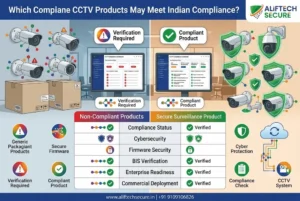
The answer is simple: India has not banned all CCTV cameras. The restriction applies only to new CCTV cameras that do not comply with the government’s mandatory security and certification requirements.
If a camera model does not meet the required standards or lacks the necessary certification, it cannot be legally imported or sold as a new product after 1 April 2026.
On the other hand, CCTV cameras that have successfully completed the required compliance process and hold valid certifications can continue to be sold across the country.
Quick Overview
| Not Allowed for New Sale | Allowed for New Sale |
|---|---|
| CCTV cameras without BIS/STQC certification | BIS/STQC-certified CCTV cameras |
| Non-compliant imported IP cameras | Certified Indian and approved international brands |
| Cameras failing Essential Requirements | Cameras meeting MeitY security standards |
| Models without valid certification | Models with verifiable certification numbers |
Only CCTV camera models that comply with India’s Essential Requirements and hold valid BIS or STQC certification can be legally sold as new products after 1 April 2026. Non-certified models cannot be imported or sold.
What Is the Status of Hikvision and Dahua Cameras?
The ER compliance framework did not appear overnight. MeitY notified the Essential Requirements in April 2024 and gave manufacturers a two-year window to comply. However, Chinese brands primarily Hikvision and Dahua did not obtain the required certifications during that period. When the deadline passed, they lost their legal right to sell in India.
The deeper reason is national security. Hikvision and Dahua equipment has been banned from US government use since 2018 under the National Defense Authorization Act (NDAA). UK, Australia, and several European governments followed with similar restrictions. India’s own intelligence agencies flagged the risk of CCTV footage from critical infrastructure railway stations, border areas, government buildings potentially transmitting to servers in China. The Ghaziabad espionage case in March 2026 accelerated enforcement by demonstrating exactly how vulnerable unsecured CCTV systems are.
Furthermore, the Make in India angle is significant. Indian brands CP Plus, Prama, Sparsh, Matrix, HiFocus invested in compliance infrastructure and obtained certifications. As a result, when Chinese brands lost their legal status, the certified Indian alternatives already existed to fill the gap.
What Happens to Your Existing Hikvision or Dahua Cameras?
Many customers specifically ask about Hikvision and Dahua because these brands have been widely used in homes, businesses, factories, schools, and commercial projects across India.
The important point to understand is that the government’s rules apply to individual camera models, not simply to brand names.
When purchasing any CCTV camera, buyers should always verify whether the exact model they are are considering holds the required certification. Compliance should never be assumed based on the popularity of a brand.
Rather than relying on marketing claims or dealer assurances, always request documentary proof of certification for the specific product.
This approach helps ensure your investment remains compliant with current regulations and reduces future risks related to replacement, warranty, or legal compliance.
Can You Continue Using Your Existing CCTV Cameras?
Yes.
If your CCTV cameras were installed before the new regulations came into effect, you generally do not need to remove or replace your existing surveillance system simply because the rules have changed.
The new compliance framework focuses primarily on new products entering the market, not cameras that are already installed and operating.
For most homeowners and businesses, this means their current surveillance system can continue functioning as usual.
Do You Need to Replace Existing Cameras?
In most situations, no.
If your CCTV system is working properly, there is usually no requirement to replace it solely because of the new regulations.
However, if a camera becomes faulty in the future or you decide to expand your surveillance coverage, the replacement camera should comply with the latest certification requirements.
Planning future upgrades with compliant products will help keep your security system aligned with current regulations.
What Happens When You Want to Expand Your Existing CCTV System?
Many businesses installed surveillance systems several years ago and now want to add more cameras as their operations grow.
Whether you’re expanding:
- A retail store
- Manufacturing unit
- Office
- Warehouse
- School
- Hospital
- Residential society
it’s important to ensure that any newly purchased cameras comply with the latest government requirements.
Before purchasing additional cameras, consult your installer to verify:
- Compatibility with your existing NVR or DVR
- Supported video standards
- Network compatibility
- ONVIF support where applicable
- Current certification status of the new model
Choosing compatible, certified cameras can help you avoid unnecessary replacement costs while maintaining a reliable surveillance system.
What About Cameras Purchased Before 1 April 2026?
This question often creates confusion.
If you legally purchased and installed your CCTV cameras before the new rules came into effect, your existing installation remains unaffected.
However, when buying additional cameras after the implementation date, it is always advisable to purchase models that comply with the current certification requirements.
For buyers, the safest approach is simple:
Always choose CCTV cameras that have valid, verifiable certification at the time of purchase.
Doing so protects your investment and ensures long-term compliance.
How to Check Whether a CCTV Camera Is Certified
One of the smartest things a buyer can do is verify a camera’s certification before making a purchase.
Never rely solely on product packaging, advertisements, or verbal assurances.
Instead, ask your dealer for the certification details of the exact model number.
Before Buying Any CCTV Camera, Ask These Questions
- Does this exact model have valid certification?
- Can you provide the official certification number?
- Is the certification still active?
- Does the certificate match the model number on the product?
- Can I verify this information through the official government records?
A genuine supplier will have no hesitation in providing this information.
Common Mistakes Buyers Should Avoid
Many customers unknowingly make purchasing decisions based only on price or brand recognition.
Here are some common mistakes to avoid:
Buying Only Because It’s Cheaper
A lower purchase price may lead to higher costs later if the camera doesn’t meet regulatory requirements or lacks proper support.
Assuming Every Model From a Popular Brand Is Certified
Certification applies to individual models, not automatically to every product offered by a manufacturer.
Always verify the specific model.
Ignoring Compatibility
Before purchasing replacement cameras, ensure they work with your existing recording system and network infrastructure.
Not Asking for Documentation
Always request:
- Product invoice
- Warranty details
- Certification documents
- Installation records
Keeping proper documentation can make future maintenance and warranty claims much easier.
Choosing an Installer Based Only on Price
The quality of installation is just as important as the quality of the camera itself.
An experienced installer can recommend suitable products, ensure proper positioning, configure secure settings, and provide ongoing support after installation.
Buying Checklist Before You Place an Order
Use this simple checklist before purchasing any CCTV camera:
✅ Verify certification
✅ Check the exact model number
✅ Confirm compatibility with your existing system
✅ Review warranty and after-sales support
✅ Purchase from an authorized supplier
✅ Request complete installation documentation
✅ Choose professional installation
Following these steps can save both time and money while helping you build a reliable, future-ready surveillance system.
Best BIS & STQC-Certified CCTV Camera Brands in India (2026)
With the new CCTV compliance rules in place, choosing a certified security camera is more important than ever. The good news is that buyers now have several trusted options that meet India’s latest security and quality standards.
Instead of selecting a camera based only on price or brand popularity, compare features, after-sales support, scalability, and certification status.
Here are some of the leading CCTV brands that offer certified models for different applications.
1. CP Plus
CP Plus is one of India’s most recognized CCTV brands and is widely used in homes, retail stores, offices, schools, apartments, and small businesses.
Best for:
- Homes
- Shops
- Small offices
- Residential societies
Key Advantages:
- Wide dealer network
- Easy availability of spare parts
- User-friendly mobile applications
- Good value for money
2. Prama
Prama has built a strong reputation in commercial and government surveillance projects. Its certified product range makes it a suitable choice for organizations looking for enterprise-grade security solutions.
Best for:
- Commercial buildings
- Government offices
- Educational institutions
- Large campuses
3. Sparsh
Sparsh focuses on secure surveillance solutions with an emphasis on data protection and reliable performance.
It offers a wide range of cameras suitable for businesses that prioritize cybersecurity and long-term reliability.
Ideal for:
- Manufacturing units
- Banks
- Warehouses
- Industrial facilities
4. Matrix
Matrix is well known for providing integrated security solutions that combine CCTV, access control, biometric attendance, and communication systems.
Businesses looking for a single security ecosystem often prefer Matrix because it simplifies management and maintenance.
Suitable for:
- Corporate offices
- Industrial projects
- Multi-location businesses
- Enterprise security
5. HiFocus
HiFocus offers modern surveillance features including AI-powered analytics, smart detection, and advanced night vision capabilities.
It is a practical choice for businesses that want intelligent monitoring and proactive security alerts.
Best for:
- Large properties
- Remote locations
- Farms
- Construction sites
- Commercial facilities
Which CCTV Brand Should You Choose?
The right CCTV camera depends on your property, budget, and security requirements.
| Requirement | Recommended Option |
|---|---|
| Home Security | CP Plus |
| Retail Shop | CP Plus / HiFocus |
| Office | Prama |
| Factory | Matrix |
| Warehouse | Matrix / Sparsh |
| School | Prama |
| Hospital | Matrix |
| Apartment Society | CP Plus |
| Large Enterprise | Matrix |
| Smart AI Surveillance | HiFocus |
There is no single “best” CCTV camera for every situation. The ideal solution depends on your property’s layout, monitoring requirements, storage needs, and future expansion plans.
How to Choose the Right CCTV Camera
Before investing in a surveillance system, consider the following factors:
Image Quality
Choose a camera with the right resolution for your environment. Higher-resolution cameras capture more detail, making it easier to identify people, vehicles, and incidents.
Night Vision
If your property requires monitoring after dark, select cameras with reliable infrared or full-color night vision capabilities.
Storage
Decide whether you want local storage, cloud storage, or a hybrid solution based on your security and budget requirements.
AI Features
Modern CCTV cameras can detect people, vehicles, line crossing, intrusion, and unusual activity. These intelligent features help reduce false alerts and improve monitoring efficiency.
Weather Protection
For outdoor installations, ensure the cameras are designed to withstand rain, dust, and extreme temperatures.
Warranty & Support
A good warranty and responsive after-sales support are just as important as the camera itself.
Why Choose AlifTech Secure?
Installing a CCTV system involves much more than purchasing cameras. Proper planning, installation, and ongoing support play a major role in ensuring your surveillance system performs reliably for years.
At AlifTech Secure, we help customers choose CCTV solutions that match both their security needs and the latest compliance requirements.
Our Services Include
- Professional site survey
- CCTV system design
- Certified camera recommendations
- Installation by trained technicians
- DVR/NVR configuration
- Mobile app setup
- Cable management
- Annual Maintenance Contracts (AMC)
- Technical support
- System upgrades
Whether you’re securing a home, office, warehouse, factory, school, hospital, or commercial building, our team focuses on delivering practical and reliable surveillance solutions.
Why Businesses in Indore Trust AlifTech Secure
Customers choose AlifTech Secure because we prioritize quality, transparency, and long-term support.
Our approach includes:
- Professional consultation before installation
- High-quality products from trusted manufacturers
- Proper system configuration
- Transparent pricing
- Timely installation
- Reliable after-sales support
- Annual maintenance services
- Assistance with future upgrades and expansion
Our goal is to help businesses and homeowners invest in surveillance systems that remain dependable for years to come.
Conclusion
India’s CCTV regulations have changed how surveillance systems are purchased, but the objective is straightforward: improve security, strengthen cybersecurity, and ensure that new CCTV cameras meet recognized quality standards.
If you’re planning to install or upgrade a CCTV system, don’t focus only on the brand name or the lowest price. Instead, verify that the camera model complies with the applicable certification requirements, matches your security needs, and comes with dependable installation and support.
Taking a little extra time before you buy can save significant costs and complications in the future.
A well-planned CCTV system is an investment in the safety of your people, property, and business.
Looking for BIS & STQC-Compliant CCTV Cameras in Indore?
AlifTech Secure provides professional CCTV consultation, installation, and maintenance for homes, offices, factories, warehouses, schools, hospitals, and commercial properties.
Our experts can help you:
- Choose the right CCTV solution
- Plan your surveillance coverage
- Install certified cameras
- Upgrade existing systems
- Expand your CCTV network
- Maintain your surveillance infrastructure
Contact AlifTech Secure today to schedule a free site survey and receive expert guidance on choosing a CCTV system that meets your security requirements.
Frequently Asked Questions
1. Is CCTV banned in India from 2026?
No. India has not banned all CCTV cameras. From 1 April 2026, only CCTV camera models that comply with the required government security and certification standards can be legally imported and sold. Existing installed systems are generally not affected.
2. Can I still use my existing Hikvision or Dahua CCTV cameras?
Yes. If your CCTV cameras were installed before the new rules came into effect and are functioning properly, you can continue using them. The regulations primarily apply to the sale and import of new CCTV cameras.
3. What is BIS certification for CCTV cameras?
BIS (Bureau of Indian Standards) certification confirms that a CCTV camera meets India’s prescribed quality and safety requirements. Depending on the product category, manufacturers may also need additional compliance approvals before selling cameras in India.
4. What is STQC certification?
STQC (Standardisation Testing and Quality Certification) is a government certification process that verifies products against applicable technical and cybersecurity requirements. It helps buyers identify CCTV cameras that meet the latest compliance standards.
5. How can I check whether a CCTV camera is certified?
Before purchasing, ask the seller for the certification details of the exact camera model. You can also verify the certification through the official STQC and BIS portals.
6. Which CCTV brand is best after the 2026 rules?
The best CCTV brand depends on your requirements, budget, and installation environment. Always choose a camera model that meets the latest certification requirements and is suitable for your specific application.


2 Comments. Leave new
[…] We covered the timeline in detail in our guide to the CCTV import and BIS rules. […]
[…] since 1 April 2026. Ask for the BIS registration number for the exact model. Our guide to the 2026 CCTV rules covers what changed, and it is worth checking which consumer brands actually hold current […]