
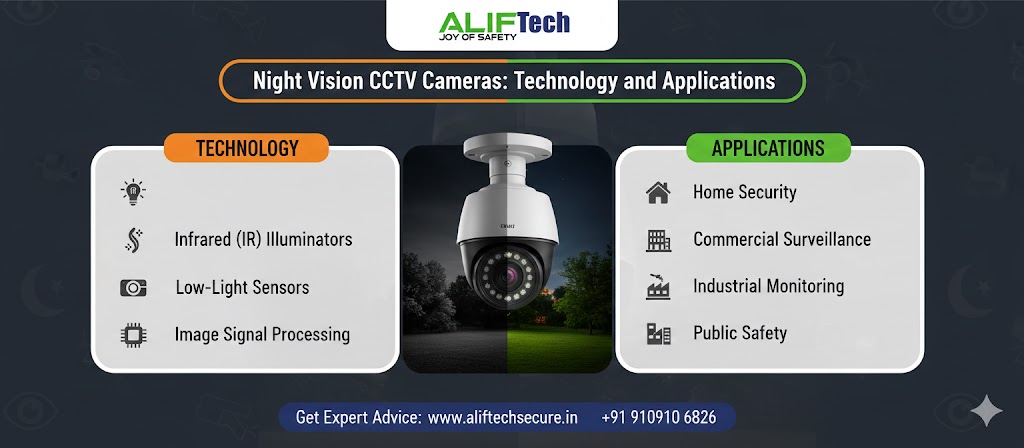
Night Vision CCTV Cameras: Technology and Applications
Night vision CCTV cameras are essential for 24/7 security surveillance, providing clear footage even in complete darkness. Modern night vision technology has evolved significantly, offering multiple solutions from traditional infrared to advanced starlight sensors and color night vision. This comprehensive guide explores night vision CCTV camera technology, types, and applications for effective round-the-clock monitoring.
Understanding night vision fundamentals is crucial before selecting security cameras. First, darkness renders standard cameras useless without adequate lighting. Moreover, night vision technology enables surveillance in low-light or zero-light conditions. Therefore, choosing appropriate night vision CCTV cameras ensures comprehensive security coverage protecting your property 24/7.
For comprehensive CCTV camera solutions, explore various night vision options. Additionally, review our CCTV camera selection guide for weather-appropriate choices in Indian conditions.
Night Vision Technology Types
Infrared (IR) Night Vision
Infrared technology is the most common night vision solution. First, IR LEDs surrounding the camera lens emit invisible infrared light. Then, the camera sensor detects reflected IR light. Additionally, this illumination is completely invisible to human eyes preventing light pollution.
How IR Works:
- IR LEDs activate automatically in low light
- Infrared wavelength: 850nm or 940nm
- Effective range: 10-100+ meters depending on LED power
- Captured images appear black and white
- No color information in IR mode
Moreover, 850nm LEDs provide better illumination but show faint red glow. Furthermore, 940nm LEDs are completely invisible but offer shorter range. Finally, IR intensity affects how far cameras can see in darkness.
Starlight/Low-Light Technology
Starlight cameras use ultra-sensitive sensors capturing color images in extreme low light. First, large sensor pixels collect more light. Then, advanced image processing amplifies available light. Additionally, they maintain color information at light levels as low as 0.001-0.008 lux.
Starlight Advantages:
- Color footage in near-darkness
- Better detail and identification
- No IR illumination needed
- More natural appearance
- Superior for license plate recognition
However, starlight cameras cost 2-3 times more than IR cameras. Moreover, they still require minimal ambient light (moonlight, street lights). Furthermore, performance degrades in complete darkness requiring IR backup.
Learn about IP camera network setup for advanced surveillance integration.
Color Night Vision (Warm Light LED)
Recent innovation uses white LED illumination providing color night vision. First, warm LED lights activate in darkness. Then, camera captures full-color footage. Additionally, visible light acts as deterrent.
Color Night Vision Features:
- Full-color footage at night
- Visible white light (deterrent effect)
- Better subject identification
- Clear facial features and clothing colors
- Useful for retail and parking lots
However, visible light may disturb occupants in residential areas. Moreover, subjects aware they’re being recorded may avoid area. Furthermore, higher power consumption than IR.
Thermal Imaging
Thermal cameras detect heat signatures rather than visible light. First, they capture infrared radiation emitted by objects. Then, create images based on temperature differences. Additionally, they work in complete darkness, smoke, or fog.
Thermal Applications:
- Perimeter security (detecting intruders)
- Fire detection and prevention
- Search and rescue operations
- Wildlife monitoring
- Critical infrastructure protection
However, thermal cameras are expensive (₹50,000-₹5,00,000+). Moreover, they don’t capture facial details or colors. Furthermore, they’re specialized tools for specific applications.
Check our fire alarm integration for comprehensive safety systems.
Key Night Vision Specifications
IR Range and Distance
IR range determines how far cameras see in darkness. First, entry-level cameras offer 10-20 meter range. Then, standard cameras provide 30-50 meters. Additionally, long-range models reach 80-150+ meters.
Range Factors:
- Number of IR LEDs (more = longer range)
- LED power (measured in watts)
- Lens focal length (affects field of view)
- Environmental conditions (clear vs foggy)
- Surface reflectivity (white walls reflect better)
Moreover, manufacturers often overstate IR range. Furthermore, effective range is typically 60-70% of claimed distance. Finally, test cameras at installation site confirming adequate coverage.
Lux Rating (Light Sensitivity)
Lux measures light sensitivity—lower numbers mean better low-light performance. First, 0.1 lux is adequate for well-lit areas only. Then, 0.01 lux handles dim lighting. Additionally, 0.001 lux represents starlight camera performance.
Lux Reference:
- 0.0001 lux: Moonless night
- 0.001 lux: Moonlight
- 0.01 lux: Deep twilight
- 0.1 lux: Street lighting
- 1 lux: Dim indoor lighting
- 10 lux: Well-lit indoor areas
Therefore, choose cameras with lux rating matching your lighting conditions. Moreover, consider ambient light sources (street lights, building lights).
Smart IR Technology
Smart IR prevents over-exposure in night vision footage. First, it adjusts IR intensity based on subject distance. Then, reduces LED power for close subjects. Additionally, increases power for distant objects.
Smart IR Benefits:
- Prevents “white-out” of close subjects
- Better detail at varying distances
- Extends LED lifespan
- Reduces power consumption
- Improved overall image quality
Moreover, without Smart IR, close subjects appear overexposed (white blob). Furthermore, distant areas remain underexposed (too dark).
Reference our network security practices for protecting video surveillance systems.
Camera Types with Night Vision
Bullet Cameras
Bullet cameras are cylindrical, designed for outdoor use. First, visible design acts as deterrent. Then, long housing accommodates more IR LEDs. Additionally, weather-resistant construction suits outdoor installation.
Bullet Camera Features:
- IR range: 30-100+ meters typical
- Weatherproof (IP66/IP67)
- Easy mounting on walls/ceilings
- Adjustable lens angle
- Price: ₹2,000-15,000
Moreover, bullet shape channels IR light forward maximizing range. Furthermore, sunshield protects lens from direct sunlight.
Dome Cameras
Dome cameras feature discreet, vandal-resistant design. First, dome cover protects camera mechanism. Then, compact design suits indoor/outdoor use. Additionally, harder to determine camera direction.
Dome Camera Features:
- IR range: 15-50 meters typical
- Vandal-resistant construction
- Aesthetic indoor appearance
- 360-degree rotation options (PTZ)
- Price: ₹2,500-20,000
However, dome cameras typically have shorter IR range than bullets. Moreover, dome cover can attract dust affecting night vision. Furthermore, some domes create IR reflection reducing image quality.
PTZ (Pan-Tilt-Zoom) Cameras
PTZ cameras offer mechanical movement and optical zoom. First, pan covers wide areas horizontally. Then, tilt adjusts vertical viewing angle. Additionally, optical zoom provides detailed close-ups.
PTZ Night Vision:
- IR range: 50-200+ meters
- Auto-tracking with night vision
- Preset positions with IR
- Powerful IR arrays
- Price: ₹15,000-₹1,50,000+
Moreover, PTZ cameras ideal for large areas requiring active monitoring. Furthermore, they’re more complex requiring professional installation.
Explore access point installation for wireless camera connectivity.
Applications and Use Cases
Residential Security
Homeowners use night vision cameras protecting property 24/7. First, monitor entrances, driveways, and yards. Then, detect intruders approaching homes. Additionally, identify visitors at night.
Home Applications:
- Front/back door monitoring
- Driveway and garage coverage
- Perimeter surveillance
- Package theft prevention
- Wildlife observation
Moreover, IR cameras prevent disturbing residents with visible lights. Furthermore, color night vision enhances identification capabilities.
Commercial and Retail
Businesses require continuous monitoring protecting assets. First, monitor parking lots after hours. Then, secure loading docks and warehouses. Additionally, prevent after-hours break-ins.
Business Uses:
- Parking lot security
- Building perimeter protection
- After-hours monitoring
- Employee safety
- Liability protection
Moreover, color night vision helps identify suspects and vehicles. Furthermore, clear footage aids insurance claims.
Industrial Facilities
Manufacturing and industrial sites need robust security. First, monitor large outdoor areas. Then, protect equipment and inventory. Additionally, ensure worker safety.
Industrial Applications:
- Equipment yard monitoring
- Perimeter fence coverage
- Gate and entry control
- Material storage areas
- Safety compliance
Moreover, long-range IR cameras cover extensive areas. Furthermore, thermal cameras detect fire hazards.
Public Spaces
Parks, streets, and public areas benefit from night vision surveillance. First, deter criminal activity through visible cameras. Then, provide evidence for investigations. Additionally, enhance public safety.
Moreover, municipal deployments require weatherproof, reliable cameras. Furthermore, vandal-resistant designs prevent tampering.
Check our video door phone options for residential entry security.
Installation Best Practices
Optimal Camera Placement
Strategic positioning maximizes night vision effectiveness. First, mount cameras at 2.5-3.5 meters height (out of reach, good angle). Then, angle downward 15-30 degrees. Additionally, avoid pointing at reflective surfaces.
Placement Guidelines:
- Cover entry and exit points
- Overlap coverage areas
- Avoid direct IR reflection (windows, mirrors)
- Consider lighting sources (street lights)
- Ensure clear line of sight
- Protect from direct weather exposure
Moreover, test night vision coverage before finalizing positions. Furthermore, adjust angles optimizing both day and night views.
Avoiding IR Reflection
IR reflection creates unusable footage. First, position cameras away from windows (IR bounces back). Then, avoid mounting too close to walls (glare effect). Additionally, keep dome covers clean.
Reflection Prevention:
- Minimum 1 meter from glass surfaces
- Angle away from reflective materials
- Regular cleaning of lens/dome
- Use external IR illuminators if needed
- Consider camera housing design
Moreover, test night vision mode during installation. Furthermore, adjust positioning if reflection detected.
Power and Connectivity
Reliable power ensures continuous operation. First, use quality power supplies (12V DC or PoE). Then, protect connections from weather. Additionally, implement backup power (UPS) for critical cameras.
Moreover, PoE simplifies installation reducing cables. Furthermore, ensure network bandwidth adequate for video streams.
Reference our PoE switch installation guide for power delivery.
Maintenance and Care
Regular Cleaning
Clean lenses maintain image quality. First, dust accumulation reduces clarity. Then, spider webs trigger false motion alerts. Additionally, moisture spots distort images.
Cleaning Schedule:
- Monthly: Wipe lens with microfiber cloth
- Quarterly: Clean housing and remove debris
- Bi-annually: Professional inspection
- As needed: After storms or dusty conditions
Moreover, use proper cleaning solutions (avoid harsh chemicals). Furthermore, power off cameras before cleaning.
Firmware Updates
Updates improve performance and security. First, manufacturers release patches fixing bugs. Then, add new features enhancing functionality. Additionally, address security vulnerabilities.
Moreover, backup configurations before updating. Furthermore, schedule updates during maintenance windows.
Seasonal Adjustments
Environmental changes affect night vision. First, tree growth may block views. Then, foliage changes alter lighting. Additionally, seasonal decorations affect coverage.
Therefore, review camera angles seasonally. Moreover, adjust IR intensity if needed. Furthermore, trim vegetation maintaining clear views.
Troubleshooting Common Issues
Poor Night Vision Quality
Blurry or dark footage needs investigation. First, check IR LEDs functioning (faint red glow visible at 850nm). Then, clean lens removing dirt/moisture. Additionally, verify Smart IR enabled.
Solutions:
- Clean lens thoroughly
- Verify IR LEDs operational
- Enable Smart IR feature
- Adjust camera angle
- Increase IR LED power (if adjustable)
Moreover, check camera specifications matching environment. Furthermore, consider adding external IR illuminators.
IR Reflection/Glare
White spots or halo effects indicate reflection. First, check for nearby reflective surfaces. Then, adjust camera angle. Additionally, move camera if necessary.
Moreover, dome cameras particularly susceptible to internal reflection. Furthermore, ensure dome cover completely clean.
Motion Detection False Alarms
Night vision can trigger false alerts. First, insects attracted to IR LEDs. Then, moving vegetation in wind. Additionally, changing shadows from passing clouds.
False Alarm Reduction:
- Adjust motion sensitivity
- Create detection zones (ignore problem areas)
- Enable object classification (people/vehicles only)
- Use scheduled recording instead of motion
- Upgrade to AI-powered cameras
Moreover, insects near lens appear as large moving objects. Furthermore, camera placement affects false alarm frequency.
Explore smart alarm integration for coordinated security.
Cost Considerations
Budget Night Vision Cameras (₹1,500-4,000):
- Basic IR LEDs (20-30m range)
- 720p-1080p resolution
- Standard sensors (0.1 lux)
- No advanced features
- Suitable for well-lit areas
Mid-Range Cameras (₹4,000-12,000):
- Good IR range (30-50m)
- 1080p-4MP resolution
- Smart IR technology
- Better low-light sensors (0.01 lux)
- Weather-resistant
Premium Cameras (₹12,000-40,000):
- Starlight/color night vision
- 4K resolution
- Long IR range (80m+)
- AI features (person/vehicle detection)
- Excellent build quality
Professional Grade (₹40,000-₹2,00,000+):
- Advanced starlight sensors
- Thermal imaging options
- 100m+ IR range
- License plate capture capability
- Industrial-grade construction
Therefore, balance budget with requirements. Moreover, quality night vision justifies investment in security.
Visit night vision cameras for current pricing.
Future Night Vision Trends
AI-Enhanced Night Vision
Artificial intelligence improves night vision capabilities. First, AI reduces noise in low-light footage. Then, enhances colors and details. Additionally, intelligent object recognition works in darkness.
Moreover, AI distinguishes people from animals reducing false alarms. Furthermore, facial recognition operates in low light.
Full-Color Night Vision Advancement
Technology continues improving color night vision. First, sensors become more light-sensitive. Then, image processing algorithms advance. Additionally, costs decrease making technology accessible.
Moreover, future cameras may eliminate IR entirely. Furthermore, ultra-sensitive sensors capture color in near-darkness.
4K and Higher Resolutions
Higher resolutions enhance night vision detail. First, 4K provides clearer identification. Then, digital zoom maintains quality. Additionally, wider coverage with detail.
However, 4K requires more bandwidth and storage. Moreover, processing power increases. Furthermore, costs remain higher than 1080p.
Conclusion: Essential 24/7 Security
Night vision CCTV cameras are indispensable for comprehensive security surveillance providing clear footage regardless of lighting conditions. First, understanding different technologies helps select appropriate cameras for specific applications. Moreover, proper installation and maintenance ensure optimal performance.
Therefore, whether choosing traditional IR, advanced starlight, or color night vision, match technology to your environment and requirements. Additionally, consider factors like IR range, lux rating, and camera type balancing performance with budget.
Ultimately, investing in quality night vision CCTV cameras ensures your security system protects property effectively 24 hours a day. The peace of mind from knowing your surveillance continues working after dark makes night vision technology essential for modern security installations.
For complete security solutions, explore our burglar alarm systems and door access control for comprehensive property protection.
Frequently Asked Questions: Night Vision CCTV
Q: How far can night vision cameras see in complete darkness?
A: IR range varies by camera: budget models 10-20 meters, standard cameras 30-50 meters, professional cameras 80-150+ meters. However, effective range is typically 60-70% of manufacturer claims. Moreover, environmental factors affect actual performance.
Q: Do night vision cameras work in complete darkness?
A: Yes, IR cameras work in complete darkness using infrared illumination invisible to humans. However, starlight cameras need minimal ambient light (moonlight, distant street lights). Moreover, thermal cameras work in absolute darkness detecting heat signatures.
Q: Is color night vision better than infrared?
A: Color night vision provides better identification (clothing colors, vehicle colors, facial features). However, it costs more and requires some ambient light. Moreover, IR works in complete darkness. Therefore, choose based on application and budget.
Q: Why does my night vision camera show white spots?
A: White spots indicate IR reflection from glass, walls, or other reflective surfaces. Additionally, insects near lens reflect IR appearing white. Therefore, reposition camera away from reflective surfaces and clean regularly.
Q: Can night vision cameras see through windows?
A: No, IR reflects off glass creating glare and unusable footage. Moreover, placing IR cameras behind windows causes severe reflection. Therefore, mount cameras outside or use cameras without IR for window installations.
Q: How long do IR LEDs last?
A: Quality IR LEDs last 50,000-100,000 hours (5-11 years of continuous operation). However, cheap LEDs may fail sooner. Moreover, Smart IR technology extends LED lifespan. Therefore, choose reputable brands for longevity.
Q: Do night vision cameras consume more power?
A: IR LEDs increase power consumption at night. Typically, cameras use 50-100% more power with IR active. However, PoE cameras handle this easily. Moreover, total consumption remains modest (5-15W typically).
Q: What’s the difference between 850nm and 940nm IR?
A: 850nm LEDs provide better illumination and longer range but show faint red glow. Conversely, 940nm LEDs are completely invisible but offer 30-40% less range. Therefore, choose 850nm unless covert surveillance required.
