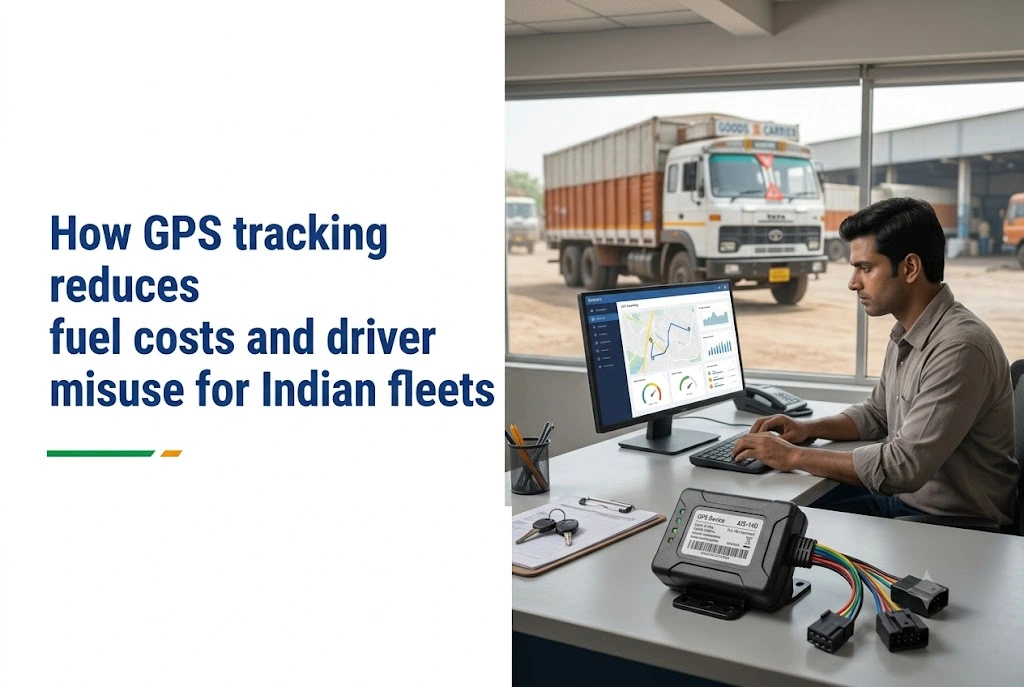
How GPS Tracking Reduces Fuel Costs and Driver Misuse for Indian Fleets

A Practical Guide for Fleet Owners in 2026

By AlifTech Secure  |  FleetNow GPS — Vehicle Tracking Solutions, Indore  |  May 2026  | www.aliftechsecure.in

Fuel accounts for 35 to 45 percent of a fleet’s total operating cost in India. That single number explains why even modest gains on fuel management pay back the cost of a tracking system quickly. Fleet owners across Rajasthan, UP, Maharashtra, and MP consistently report fuel cost reductions of 12 to 20 percent after installing proper GPS tracking with fuel monitoring. For a fleet of 10 trucks running a monthly fuel bill of Rs. 5 lakh, a 15 percent reduction means Rs. 75,000 recovered every month.

This guide covers exactly how GPS tracking delivers those savings — the specific mechanisms that catch fuel theft, reduce idle time, flag route deviation, and change driver behaviour. It also covers what you should realistically expect in terms of savings and how quickly the system pays for itself.

Quick numbers

•   Fuel is 35 to 45 percent of total operating cost for Indian commercial fleets.

•   GPS tracking with fuel monitoring reduces fuel costs by 12 to 20 percent on average.

•   Idle time reduction alone saves 5 to 8 percent of monthly fuel costs for most fleets.

•   About one in three GPS tracking users sees a positive return on investment within 6 months.

•   Driver behaviour coaching reduces accident-related costs by an average of 22 percent.

Where Fuel Money Actually Disappears in an Indian Fleet

Fuel losses in a typical commercial fleet rarely come from one dramatic event. They build up steadily through several smaller channels that individually seem minor but add up to serious money by month-end.

Idle time — the silent fuel drain

Every hour a truck runs its engine at standstill burns diesel without moving a kilogram of cargo. At a delivery bay waiting for loading crew, at a toll plaza in a long queue, or with the AC running at a rest stop — idle time adds up fast. A vehicle idling for one extra hour per day across 25 working days consumes roughly 20 to 25 litres of diesel per month for nothing. Across a 10-truck fleet, that is 200 to 250 litres every month going straight to waste.

GPS tracking with idle time alerts flags any vehicle that has had its engine running without moving for more than a set threshold — typically 10 to 15 minutes. Drivers who know the system generates idle alerts behave differently at rest stops. The saving is immediate and requires no confrontation, just awareness that the data exists.

Route deviation — extra kilometres nobody planned

A driver who takes a longer route — whether to visit a personal errand, avoid a toll, or simply through habit — burns more fuel than the planned route required. Without GPS tracking, a fleet owner has no easy way to compare the actual route against the most efficient one. Furthermore, route deviation often correlates with longer trip times, which delays the next job and reduces daily vehicle utilisation.

GPS tracking captures complete route history for every trip. Route deviation alerts notify the manager in real time when a vehicle moves outside its planned path. Over time, comparing actual routes against planned ones identifies which routes and which drivers consistently generate excess kilometres — and gives the fleet manager specific data for a focused conversation rather than a general complaint.

Fuel siphoning and adulteration

This is the most direct form of fuel loss, and it is more common in Indian fleets than most fleet owners want to acknowledge. Drivers or fuel station staff siphon diesel from the tank before or after a fill, top up with adulterated fuel and pocket the difference, or manipulate fuel receipts. Without a fuel sensor in the tank, none of this shows up anywhere — the receipts look correct and the tank level is what it is when someone next checks it.

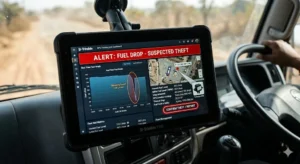
A fuel level sensor integrated with GPS tracking monitors the tank continuously. It flags sudden, unexplained drops in fuel level that do not match the vehicle’s movement or consumption rate. As a result, siphoning events that used to go completely undetected appear as timestamped alerts — showing exactly when and where the fuel level dropped. One Maharashtra logistics operator caught an employee draining excess fuel from construction equipment before signing off. After installing fuel monitoring across 12 machines, they saved approximately Rs. 1.8 lakh per month.

How GPS Tracking Catches Fuel Theft in Real Time

A basic GPS tracker shows location. A properly configured GPS system with a fuel sensor does considerably more.

GPS tracking fuel costs Indiadiesel theft detection sensor alert
GPS tracking fuel costs India
diesel theft detection sensor alert

The fuel sensor and what it detects

A capacitive fuel level sensor installs inside the vehicle’s fuel tank. It sends live tank level readings to the GPS dashboard every few seconds. The software plots this data against vehicle movement and engine data. Any sudden drop in fuel level that does not match normal consumption — the kind of drop that happens when someone drains fuel from the tank — generates an immediate alert. The alert includes the timestamp, location, and the amount of fuel lost.

This differs fundamentally from relying on fuel receipts and mileage calculations. Those methods catch fuel theft only if someone runs the numbers at month-end — and even then, only if the theft has been large enough to show up clearly against normal variation. A fuel sensor catches each event as it happens, which makes the data much harder to dispute and much easier to act on.

Fill event monitoring — catching adulteration

The sensor also records every fuel fill event — time, location, and the quantity added. This lets the fleet manager compare the quantity recorded by the sensor against the fuel receipt the driver submits. Significant differences between the two suggest either adulteration — cheaper fuel topped up to the receipt quantity — or receipt manipulation. Over time, this creates a clear record of fill integrity across the entire fleet.

The January 2026 Navi Mumbai case

In January 2026, a 12,000-litre diesel tanker left a Navi Mumbai depot at 2:15 AM. No driver had a scheduled shift. The fuel monitoring system detected ignition outside scheduled hours, triggered a geofence alert the moment the truck crossed the depot boundary, and began sending live GPS coordinates every 15 seconds. By 2:47 AM, the fleet manager had called police with a live location. By 4:30 AM, the vehicle was recovered near Lonavala — fuel intact, two men in custody. They were part of a theft ring that had operated across Maharashtra for over a year. Without GPS: the tanker and over Rs. 7 lakh of diesel would have been gone. With GPS: recovery and arrests within 2 hours 15 minutes.

GPS Tracking and Driver Misuse — What Actually Changes

Driver misuse costs Indian fleets money in several ways beyond direct fuel theft. Understanding each one helps set realistic expectations for what GPS tracking recovers.

GPS tracking driver misuseIndia overspeed geofence route deviation

GPS tracking driver misuse
India overspeed geofence route deviation

Unauthorised vehicle use

A vehicle used outside working hours for personal errands burns fuel the business pays for and adds kilometres to a vehicle the business maintains. Geofencing — virtual boundaries drawn around depot locations or approved operating zones — generates alerts when a vehicle moves outside permitted areas during off-hours. Ignition-on alerts outside scheduled shift times give the fleet manager an instant notification when a vehicle starts without authorisation.

Overspeeding and harsh driving

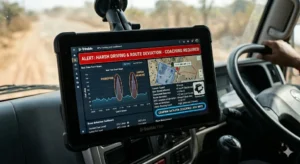
Harsh acceleration, hard braking, and sustained high speeds all increase fuel consumption above what normal driving on the same route would require. Furthermore, they accelerate tyre and brake wear. GPS tracking records harsh driving events continuously, scoring each driver against the rest of the fleet. Over time, this creates a clear ranking of which drivers cost the fleet more through driving style — and gives the fleet manager specific incidents to reference in coaching rather than vague impressions.

The behaviour change that GPS tracking produces is largely about awareness. Drivers who know their trips generate a driving style report behave differently from those who believe nobody is watching. The system does not need to catch every event. The fact that data exists changes the calculus for most drivers without any management action at all.

Long stops and unscheduled breaks

A GPS system records every stop — location, duration, and time. Fleet managers can see which drivers consistently take longer breaks than the schedule allows, which delivery stops take far longer than expected, and whether vehicles sit idle at particular locations where they should not. This data turns vague suspicions about productivity into a clear factual record. As a result, management conversations shift from contested impressions to documented facts.

The Real Savings Numbers — What Indian Fleets Actually Report

Here is a realistic picture of what GPS tracking delivers financially for a typical commercial fleet in India.

Fleet owners across Rajasthan, Uttar Pradesh, Maharashtra, and MP consistently report fuel cost reductions of 12 to 20 percent after installing GPS tracking with fuel monitoring. A global survey of fleet management professionals found average fuel savings of 16 percent, with accident-related cost reductions of 22 percent. One in three GPS tracking users reports a positive return on investment within six months of installation.

What savings look like for a 10-vehicle Indore fleet

Consider a 10-truck fleet operating out of Indore with a monthly fuel bill of Rs. 5 lakh. A 15 percent fuel saving recovers Rs. 75,000 per month. A typical GPS tracking system for that fleet — hardware, SIM, and platform fees — costs Rs. 8,000 to Rs. 15,000 per year per vehicle. At Rs. 1.2 lakh annual system cost across 10 vehicles, the fuel saving alone pays for the system in under two months. Everything after that is net recovery.

Beyond fuel, route optimisation typically reduces total kilometres driven by 8 to 12 percent. Fewer kilometres means slower tyre and brake wear, lower servicing frequency, and extended vehicle life. These savings are harder to quantify month-to-month but accumulate significantly over a vehicle’s operating life.

The savings that are hardest to measure but most important

Fuel savings are the easiest to calculate. However, the more important savings often come from avoided incidents — a vehicle recovered before fuel is gone, a driver misconduct case resolved with evidence rather than dispute, an accident avoided because harsh braking alerts triggered a coaching conversation. These outcomes do not appear on a fuel cost spreadsheet, but they determine whether a fleet is profitable and well-managed or constantly firefighting problems that GPS tracking would have caught early.


Saving CategoryTypical Range for Indian Fleets
Fuel cost reduction (idle, route, driver style)12 to 20 percent of monthly fuel bill
Fuel theft recovery (with fuel sensor)Varies — Rs. 5,000 to Rs. 80,000/month per fleet
Kilometre reduction (route optimisation)8 to 12 percent of total monthly kilometres
Accident-related cost reductionAverage 22 percent across reported fleets
Vehicle misuse preventionQuantified by trip logs and off-hours alerts
Insurance premium reductionSome insurers reduce premiums for monitored fleets
FleetNow GPS Fuel Monitoring Solution

What You Need to Get These Savings — Not Every GPS System Delivers

This matters because many fleet owners install a basic GPS tracker, see no significant fuel savings, and conclude that GPS tracking does not work. In most cases, the system works — the configuration does not.

Fuel sensor integration is non-negotiable for fuel theft detection

A GPS tracker without a fuel sensor cannot detect fuel theft. It shows vehicle location. It does not show tank level. To catch siphoning and adulteration, you need a dedicated capacitive fuel sensor wired into the tank — and a GPS platform that reads and analyses that sensor data in real time. This is a separate hardware component from the GPS device itself. Confirm your vendor includes it before installation, not after.

Geofencing and idle time alerts need to be configured correctly

Most GPS platforms support geofencing and idle time alerts, but they ship with default settings that may not suit your specific operation. A geofence that is too large misses useful alerts. An idle time threshold set too low generates constant false positives that drivers and managers quickly learn to ignore. Before going live, configure these settings to match your actual depot locations, route zones, and typical stop durations. This takes time upfront and saves frustration for months afterwards.

Driver behaviour data only reduces misuse if management actually uses it

GPS tracking generates driver scoring data. However, that data reduces driver misuse only if someone reviews it and acts on it. A fleet manager who never opens the driver behaviour report will not see behaviour change. A monthly review — showing each driver their score, comparing them against the fleet average, and addressing the bottom performers specifically — produces measurable change. The technology provides the data. Management discipline delivers the saving.

Type URL
 choose GPS fleet tracking system (existing blog)https://aliftechsecure.in/blog/choose-gps-fleet-tracking-system-india/
 AIS-140 GPS compliance guide (existing blog)https://aliftechsecure.in/blog/ais-140-gps-compliance-guide-fleet-operators/
FleetNow GPS vehicle trackinghttps://aliftechsecure.in/fleetnow-gps/
 GPS AMC serviceshttps://aliftechsecure.inhttps://www.siam.in/statistics.aspx?mpgid=8&pgidtrail=9/gps-amc/
 contact AlifTech Securehttps://aliftechsecure.in/contact/
 SIAM commercial vehicle datahttps://www.siamindia.com/
 MoRTH PIB fuel/transport datahttps://pib.gov.in/

How FleetNow GPS Cuts Fuel Costs for Indore and Pithampur Fleets

Every installation includes proper fuel sensor wiring by experienced technicians, configuration of alerts and geofences to match your specific routes and operating zones, and hands-on training for the managers who will use the dashboard daily. We do not hand over a login and leave fleet owners to figure it out alone.

After installation, we offer GPS AMC — Annual Maintenance Contracts — covering ongoing sensor calibration, SIM connectivity monitoring, and platform support. Fuel sensors drift over time and need periodic calibration to maintain accuracy. Without it, the data your system generates becomes less reliable, and the savings it delivers quietly shrink.


  • Fuel sensor integration included — catches siphoning and adulteration, not just location
  • Idle time, geofencing, and route deviation alerts configured for your specific routes
  • Driver behaviour scoring with monthly report support
  • Fill event monitoring — compares sensor readings against submitted fuel receipts
  • GPS AMC for ongoing sensor calibration and platform support
  • Local service across Indore and Pithampur — fast response when something needs attention


FleetNow GPS by AlifTech Secure — Indore

Call / WhatsApp: +91 9109106826

www.aliftechsecure.in  |  aliftechsecure@gmail.com

112 Basement, Akbar Ali Complex, MG Road, Palasia Square, Indore — 452001


Get a Free Fleet Fuel Cost Assessment

Tell us your fleet size and monthly fuel bill — we show you what GPS tracking can realistically recover.

Call / WhatsApp: +91 9109106826  |  www.aliftechsecure.in

Questions Indian Fleet Owners Ask About GPS and Fuel Savings

How much fuel can GPS tracking realistically save for my fleet?

For a commercial fleet in India, realistic savings from GPS tracking with proper fuel monitoring — including idle time reduction, route optimisation, and fuel theft detection — typically fall between 12 and 20 percent of the monthly fuel bill. For a fleet spending Rs. 5 lakh per month on fuel, that is Rs. 60,000 to Rs. 1 lakh per month recovered. Results depend heavily on how much idle time, route deviation, and driver misuse existed before tracking was installed — fleets with higher pre-existing losses recover more quickly.

Does GPS tracking work without a fuel sensor?

GPS tracking without a fuel sensor helps with route optimisation, idle time alerts, and driver behaviour monitoring — all of which reduce fuel consumption indirectly. However, it cannot detect direct fuel theft — siphoning or adulteration — because it has no visibility into the actual tank level. To catch fuel theft specifically, you need a dedicated fuel sensor integrated with the GPS system. This is a separate hardware component that your vendor should install alongside the GPS device.

How quickly does a GPS tracking system pay for itself?

For most Indian commercial fleets, a properly configured GPS system with fuel monitoring pays for itself within 2 to 4 months through direct fuel savings alone. Global data shows about one in three GPS tracking users sees positive ROI within 6 months. Fleets with significant pre-existing fuel theft or idle time problems often recover their investment faster, since the system catches losses that were already happening — it just makes them visible for the first time.

Can drivers disable or tamper with the GPS tracker?

AIS-140 certified VLTD devices include tamper detection circuits. If a driver attempts to disconnect or interfere with the device, the system generates an immediate alert rather than silently going offline. Additionally, the device includes a minimum 4-hour battery backup, so cutting main power does not disable tracking. For non-certified devices used for fleet management rather than compliance, tamper detection varies by hardware — it is worth confirming this feature before purchasing.

Does GPS tracking change driver behaviour, or do drivers just work around it?

Most fleet operators report genuine and lasting behaviour change, not workarounds. The key factor is how management uses the data. Drivers who receive specific monthly feedback — their idle time score, their harsh braking count, their route deviation record — and know that outliers face a conversation with management, consistently improve over time. Drivers who know a GPS tracker is installed but never hear anything about the data quickly return to old habits. The technology creates the data. Management discipline converts that data into savings.

The Savings Are Real — But Only With the Right System

The fleets that see the biggest savings are not necessarily the largest ones. They are the ones that configured their system correctly, reviewed the data consistently, and used it to change driver behaviour rather than just watching dots on a map.

If you are curious about what GPS tracking could realistically recover for your specific fleet, start with a conversation. Share your fleet size and monthly fuel bill — we can give you a realistic estimate based on what similar fleets in Indore and Pithampur have actually saved.


  • Fuel is 35 to 45 percent of operating cost for Indian commercial fleets
  • GPS tracking with fuel monitoring reduces fuel costs by 12 to 20 percent on average
  • A fuel sensor is essential for detecting siphoning — a GPS tracker alone cannot catch fuel theft
  • Idle time, route deviation, and driver behaviour monitoring all contribute to the saving
  • The system pays for itself in 2 to 4 months for most Indian commercial fleets

AlifTech Secure  |  FleetNow GPS — Vehicle Tracking Solutions, Indore MP  | www.aliftechsecure.in  |  +91 9109106826

Leave a Reply

Your email address will not be published. Required fields are marked *

Fill out this field
Fill out this field
Please enter a valid email address.
You need to agree with the terms to proceed