
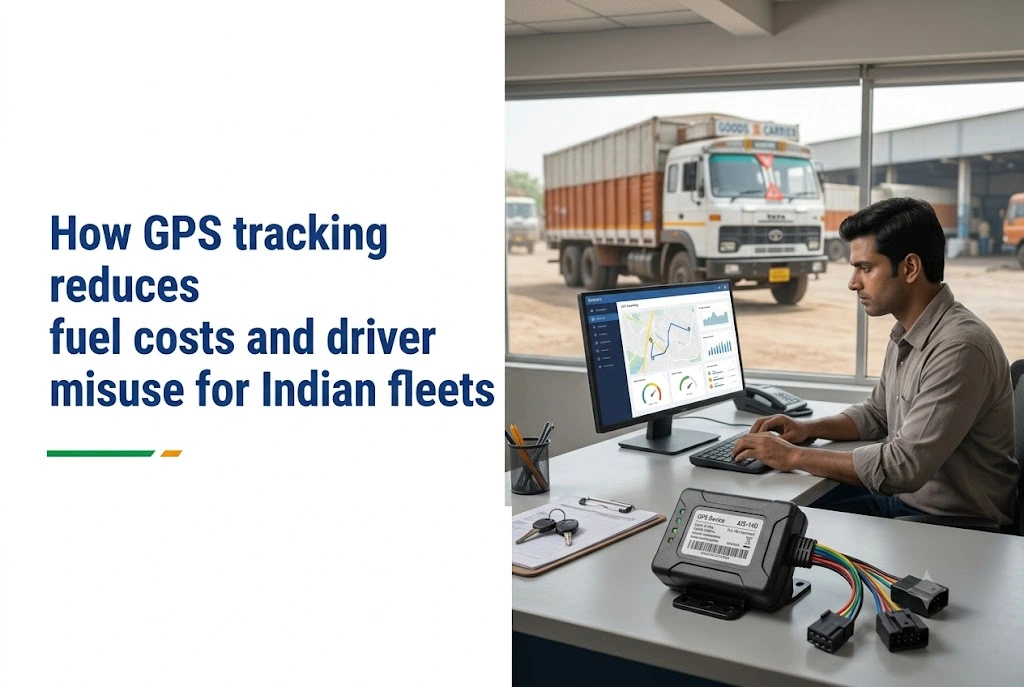
How GPS Tracking Reduces Fuel Costs and Driver Misuse for Indian Fleets
A Practical Guide for Fleet Owners in 2026
By AlifTech Secure | FleetNow GPS — Vehicle Tracking Solutions, Indore | May 2026 | www.aliftechsecure.in
Fuel is the largest single line in an Indian fleet’s operating cost, which is why even modest gains on fuel management pay back a tracking system quickly.
But fleet owners who install a basic tracker, watch dots move on a map, and see no change in the fuel bill usually conclude GPS does not work. Almost always the system works and the configuration does not.
This guide covers where fuel money actually disappears, which specific features recover it, what to expect realistically, and why a tracker without a fuel sensor cannot do the one job most owners buy it for.
Quick Answer
- A GPS tracker alone cannot detect fuel theft. It shows location, not tank level.
- A capacitive fuel sensor in the tank is what catches siphoning and adulteration.
- Idle time, route deviation and driver behaviour are where the routine losses sit.
- Configuration decides the outcome. Default geofences and idle thresholds produce noise, not savings.
- Data alone changes nothing. Someone has to review it monthly for behaviour to shift.
Where Fuel Money Actually Disappears
Losses rarely come from one dramatic event. They build through several channels that each look minor and add up by month-end.
Idle time
Every hour an engine runs at standstill burns diesel without moving cargo. At a loading bay waiting for crew, in a toll queue, or with the AC running at a rest stop.
A vehicle idling an extra hour a day across 25 working days consumes roughly 20 to 25 litres of diesel for nothing. Across ten trucks that is 200 to 250 litres a month.
Idle alerts flag any vehicle whose engine has run without moving beyond a set threshold, usually 10 to 15 minutes. Drivers who know alerts exist behave differently at rest stops, so the saving arrives without confrontation.
Route deviation
A driver taking a longer route, whether for a personal errand, to avoid a toll, or simply out of habit, burns more fuel than the planned route needed. Longer trips also delay the next job and cut daily utilisation.
GPS captures complete route history for every trip, and deviation alerts notify the manager in real time. Over weeks, comparing actual routes against planned ones shows which routes and which drivers consistently generate excess kilometres, which turns a general complaint into a specific conversation.
Siphoning and adulteration
This is the most direct loss, and the one owners are least comfortable discussing. Diesel drained from the tank before or after a fill, cheaper fuel topped up to match the receipt quantity, or manipulated receipts.
Without a sensor in the tank, none of it appears anywhere. The receipts look correct and the tank level is whatever it is when somebody next checks.
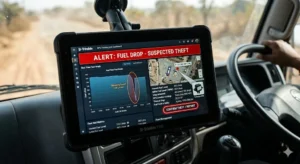
diesel theft detection sensor alert
Why a Tracker Alone Will Not Catch Fuel Theft
This is the single most important thing in this article, and it is where most disappointed fleet owners went wrong.
A GPS tracker shows location. It does not show tank level. So it can help with routing, idle time and driver behaviour, all of which reduce consumption indirectly. It cannot see fuel leaving the tank.
What the fuel sensor does
A capacitive fuel level sensor installs inside the tank and sends live level readings to the platform every few seconds. The software plots that against vehicle movement and engine data.
Any sudden drop that does not match normal consumption, the kind that happens when fuel is drained, generates an immediate alert with timestamp, location and quantity lost.
That is fundamentally different from reconciling receipts against mileage at month-end, which only catches theft large enough to show against normal variation, and only if somebody actually runs the numbers. A sensor catches each event as it happens, which makes the data harder to dispute.
Fill event monitoring
The sensor also records every fill: time, location and quantity added. Comparing that against the receipt the driver submits shows up either adulteration, where cheaper fuel is topped up to the receipt quantity, or receipt manipulation.
Over time this builds a record of fill integrity across the fleet, which is often more useful than any single caught event.
Our fuel monitoring system covers the sensor side, and it fits alongside standard GPS tracking rather than replacing it.
Driver Misuse, and What Changes
Misuse costs money in several ways beyond direct theft.
Unauthorised use. A vehicle used outside working hours burns fuel the business pays for and adds kilometres to a vehicle the business maintains. Geofencing generates alerts when a vehicle leaves permitted zones during off-hours, and ignition alerts outside scheduled shifts notify the manager the moment a vehicle starts without authorisation.
Harsh driving. Hard acceleration, heavy braking and sustained high speed all raise consumption above what the same route would need otherwise, while accelerating tyre and brake wear. GPS records these events continuously and scores each driver against the fleet, which gives you specific incidents to reference rather than vague impressions.
Long stops. Every stop is recorded with location, duration and time. That shows which drivers take longer breaks than scheduled, which delivery points genuinely take longer than expected, and where vehicles sit idle when they should not.
The behaviour change is mostly about awareness. Drivers who know their trips produce a report behave differently from those who assume nobody is watching. The system does not need to catch everything, since the existence of the data changes the calculation for most people without any management action at all.
For commercial vehicles there is a compliance dimension too, since a certified AIS-140 device is a legal requirement rather than a management tool. Our AIS-140 compliance guide covers that separately.
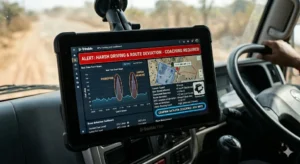
India overspeed geofence route deviation

Frequently Asked Questions
Does GPS tracking work without a fuel sensor?
It helps with route optimisation, idle alerts and driver behaviour, all of which reduce consumption indirectly. But it cannot detect siphoning or adulteration, because it has no visibility into tank level. To catch fuel theft specifically you need a dedicated fuel sensor integrated with the GPS system, installed alongside the tracker.
How much fuel will tracking actually save my fleet?
It depends entirely on what is being lost now. Fleets with heavy idle time, route deviation or active siphoning recover a lot, while disciplined fleets recover much less because the losses were not there. Get an estimate calculated against your own six months of fuel bills rather than accepting a percentage from any vendor, including us.
How quickly does the system pay for itself?
Where real losses exist, the fuel sensor is usually the fastest-paying component, since it catches theft that was already happening and simply invisible. Where losses are small, payback runs considerably longer. The honest calculation needs your fuel bill and your current idle and kilometre figures, which takes about an hour to work through.
Can drivers disable or tamper with the tracker?
Certified AIS-140 VLTD devices include tamper detection, so an attempt to disconnect or interfere generates an alert rather than the device silently going offline. They also carry internal battery backup, so cutting main power does not immediately stop tracking. On non-certified fleet devices, tamper detection varies by hardware, and it is worth confirming before purchase.
Do drivers just work around GPS tracking?
Most operators report lasting change rather than workarounds, and the deciding factor is how management uses the data. Drivers who get specific monthly feedback on idle time, harsh braking and route record, and who know outliers get a conversation, improve consistently. Drivers who know a tracker exists but never hear about the data return to old habits within weeks.
The Savings Are Real, With the Right System
The fleets that save most are rarely the largest. They are the ones that specified a fuel sensor, configured alerts to match their actual routes, and built a monthly review habit.
So before buying, ask three questions of any vendor. Is a fuel sensor included? Who configures the geofences and thresholds for my routes? And what does the monthly review process look like after handover?
A vendor who answers all three properly is selling you a system. One who answers none is selling you a box.
| FleetNow GPS by AlifTech Secure — Indore Call / WhatsApp: +91 9109106826 www.aliftechsecure.in | aliftechsecure@gmail.com 112 Basement, Akbar Ali Complex, MG Road, Palasia Square, Indore — 452001 |
| Get a Free Fleet Fuel Cost Assessment Tell us your fleet size and monthly fuel bill — we show you what GPS tracking can realistically recover. Call / WhatsApp: +91 9109106826 | www.aliftechsecure.in |
AlifTech Secure | FleetNow GPS — Vehicle Tracking Solutions, Indore MP | www.aliftechsecure.in | +91 9109106826

